Cortinarius anomalus (Fr.) Fr. - Variable Webcap
Phylum: Basidiomycota - Class: Agaricomycetes - Order: Agaricales - Family: Cortinariaceae
Distribution - Taxonomic History - Etymology - Toxicity - Identification - Reference Sources
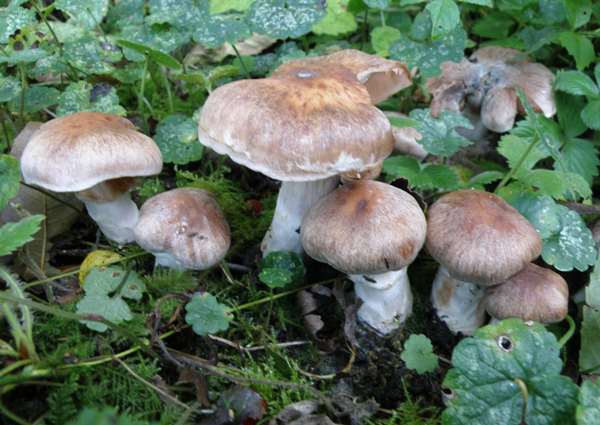
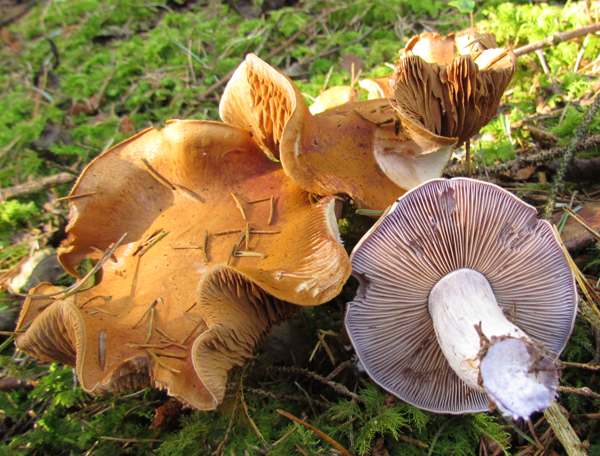
In the generally difficult Cortinarius group of fungi Cortinarius anomalus is one of the most variable and difficult to identify from macroscopic characters alone - hence its common name. Cap colour in particular is a very variable feature and changes as the fruitbody matures.
Like all fungi in the Cortinarius genus, this mushroom should not be eaten; it could easily be confused with some of the webcaps that contain orellanine and are known to be deadly poisonous.
Distribution
A fairly common and widespread species in Britain and Ireland, the Variable Webcap is found also throughout most of mainland Europe and Asia. Cortinarius cinnamomeus is also reported to occur in North America.
Look out for this gregarious webcap in mixed woodland; it is most commonly found in Britain in woods containing birches and pines.
Taxonomic history
When the great Swedish mycologist Elias Magnus Fries described this mushroom scientifically in 1818, he gave it the binomial name Agaricus anomalus; the basionym was retained in 1838 when Fries transferred this species to the new genus Cortinarius and the scientific name, by which this species is generally recognised today, became Cortinarius anomalus.
Synonyms of Cortinarius anomalus include Agaricus anomalus Fr., Cortinarius anomalus var. anomalus (Fr.) Fr., Cortinarius azureus Fr., Cortinarius lepidopus Cooke, Dermocybe anomala (Fr.) Ricken, Dermocybe azurea (Fr.) Ricken, Cortinarius anomalus var. lepidopus (Cooke) J. E. Lange, Cortinarius azureovelatus P. D. Orton, Cortinarius epsomiensis P. D. Orton, and Cortinarius anomalus f. lepidopus (Cooke) Nespiak.
Etymology
The generic name Cortinarius is a reference to the partial veil or cortina (meaning a curtain) that covers the gills of immature caps. In the genus Cortinarius most species produce partial veils in the form of a fine web of radial fibres connecting the stem to the rim of the cap rather than a solid membrane.
Just as it sounds, the specific epithet anomalus means 'paradoxical' and implies that the appearance of this mushroom is a very variable, making it difficult to identify with certainty from macroscopic characters alone. (Unfortunately, however, the same can be said of the majority of Cortinarius species.)
Toxicity
This mushroom is generally regarded as 'suspect' and may contain dangerous toxins; it should not be gathered for eating. Some Cortinarius species - notably Cortinarius rubellus and Cortinarius orellanus - contain the toxin orellanine, which if eaten destroys human kidneys and liver.
Identification guide
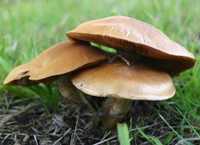 |
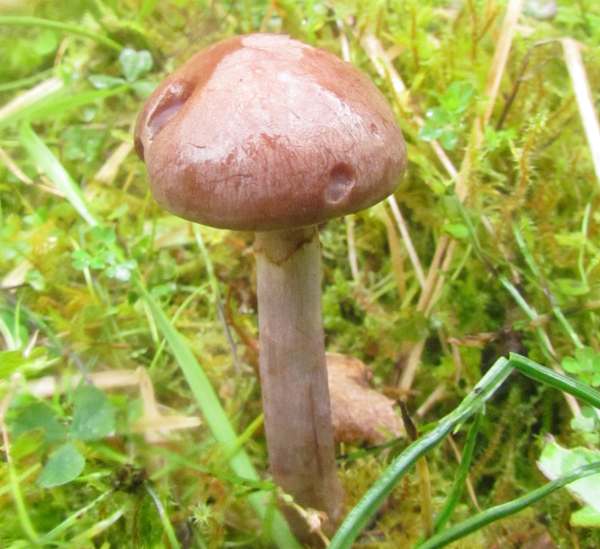
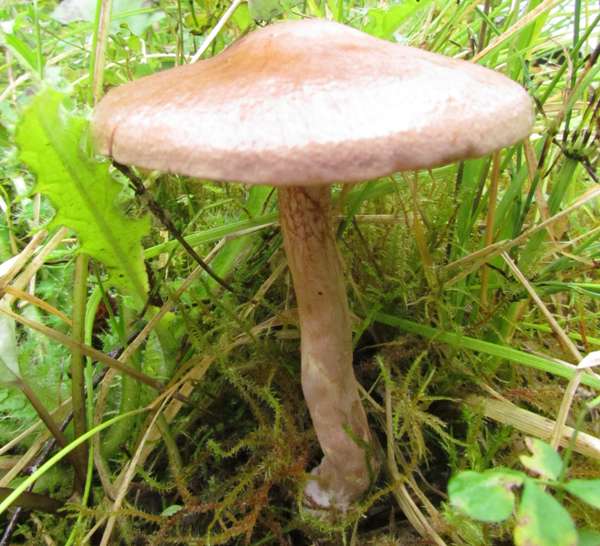
CapThe cap of Cortinarius anomalus is at first convex with a web-like cortina covering the gills, becoming bell-shaped and eventually flattening or even turning up irregularly at the edges;often retaining a slight central umbo; cap surface is dry with fine radial fibres, initially ochraceous brown in the centre of the cap and paler and often violaceous towards the margin, but progressively turning reddish brown or mid brown from the centre. Cap diameter at maturity varies from 2.5 to 7cm. |
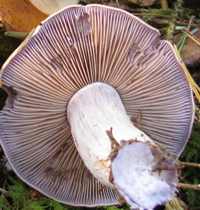 |
GillsAt first violaceous, turning clay-brown and finally ochraceous-rusty brown as the spores mature. StemThe whitish ochre-tinged stem has a violaceous flush towards the apex and faint and sometimes short-lived yellowish bands left by the veil; 5 to 12mm in diameter, slightly swollen towards its base; between 5 and 9cm long. The stem flesh is white, with a lilac tinge towards the stem base. |
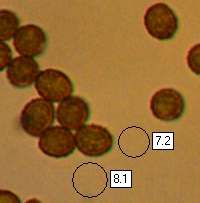 |
SporesBroadly ellipsoidal to subglobose; surface minutely roughened, 6.5-8.5 x 5.5-7.5µm. Spore printRust-brown. |
Odour/taste |
Odour slight, pleasant but becoming sickly sweet in old fruitbodies. (It is unwise to taste any Cortinarius species, as several of them are deadly poisonous.) |
Habitat & Ecological role |
Mycorrhizal, in mixed woodland, most often in small groups under birches and pines. |
Season |
July to November in Britain and Ireland. |
Similar species |
Cortinarius torvus is similar but has a stocking-like structure on its stem. |
Reference Sources
Fascinated by Fungi, 2nd Edition, Pat O'Reilly 2016, reprinted by Coch-y-bonddu Books in 2022.
Funga Nordica, Henning Knudsen and Jan Vesterholt, 2008.
Fungi of Switzerland Agarics, part 3: Cortinariaceae, Breitenbach, J., Kränzlin, F.
Dictionary of the Fungi; Paul M. Kirk, Paul F. Cannon, David W. Minter and J. A. Stalpers; CABI, 2008
Taxonomic history and synonym information on these pages is drawn from many sources but in particular from the British Mycological Society's GB Checklist of Fungi.
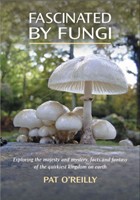
Fascinated by Fungi. Back by popular demand, Pat O'Reilly's best-selling 450-page hardback book is available now. The latest second edition was republished with a sparkling new cover design in September 2022 by Coch-y-Bonddu Books. Full details and copies are available from the publisher's online bookshop...