Muscari comosum (Leopoldia comosa) - Tassel Grape Hyacinth
Phylum: Magnoliophyta - Class: Equisetopsida - Order: Asparagales - Family: Asparagaceae
Description
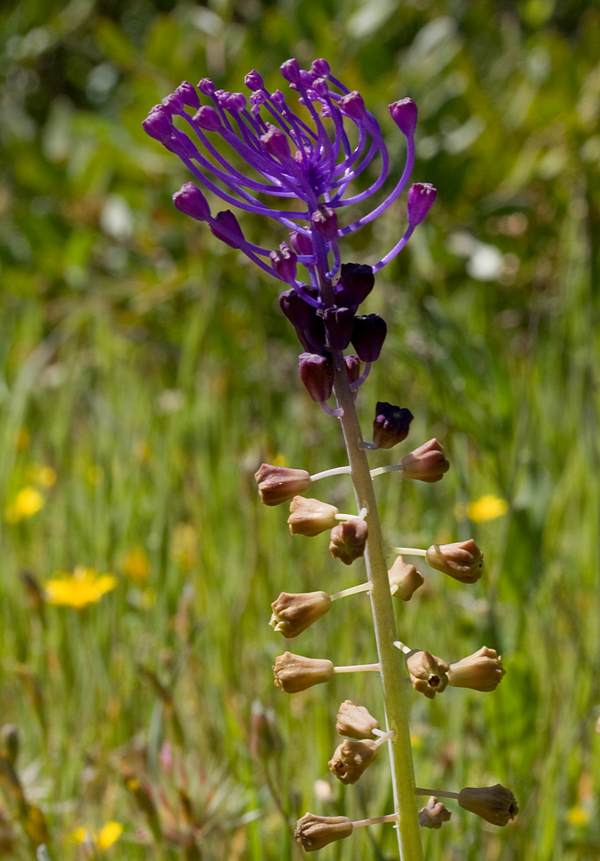
Tassel Grape Hyacinth, also known as the Tassle (note the alternative spelling) Grape Hyacinth or sometimes just Tassle Hyacinth, is an interesting plant with two kinds of flowers - those at the top of the stem, which form the 'tassel,' are sterile and are simply present to attract pollinating insects, whilst the brownish-purple flowers lower down the stem are fertile and produce three-lobed fruit capsules after pollination has taken place.
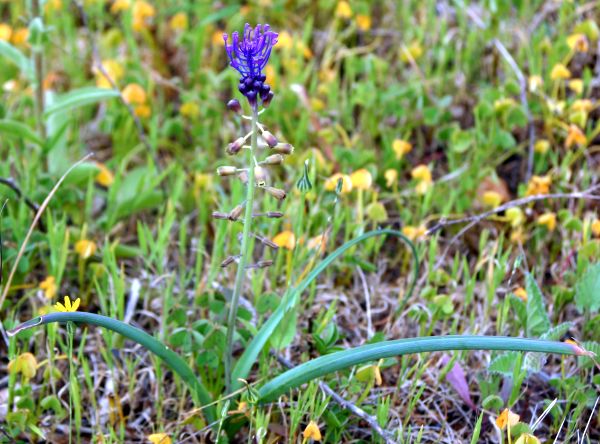
Plants are usually 15 to 20cm tall, with narrow strap-like green leaves.
Distribution
This bulbous perennial plant is common throughout the Mediterranean region and in much of southern/central Europe. Its native range extends to northern Africa and parts of Asia. Elsewhere, including Britain and |Ireland as well as North America, New Zealand and |Australia, this is an introduced alien species and in some regions it is considered to be an invasive weed.
Habitat
Tassel Grape Hyacinth can be found in disturbed ground in fields, on roadsides and in other grassy or stony places. Ulikke Grape Hyacint, which often produces large clumps of flowers, in our experience the Tassel Hyacinth is most often seen either singly or is small clumps and scattered groups.
Flowering times
Tassel Hyacinths are usually in flower between March and early June.
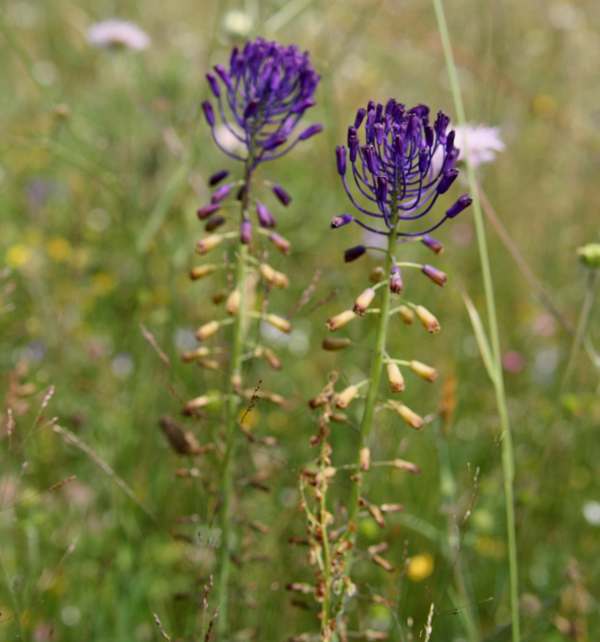
This specimens shown on this page were photographed in the Algarve in Portugal during March and April.


Please Help Us: If you have found this information interesting and useful, please consider helping to keep First Nature online by making a small donation towards the web hosting and internet costs.
Any donations over and above the essential running costs will help support the conservation work of Plantlife, the Rivers Trust and charitable botanic gardens - as do author royalties and publisher proceeds from books by Pat and Sue.