
Fistulina hepatica (Schaeff.) With. - Beefsteak Fungus
Phylum: Basidiomycota - Class: Agaricomycetes - Order: Agaricales - Family: Fistulinaceae
Distribution - Taxonomic History - Etymology - Culinary Notes - Identification - Reference Sources
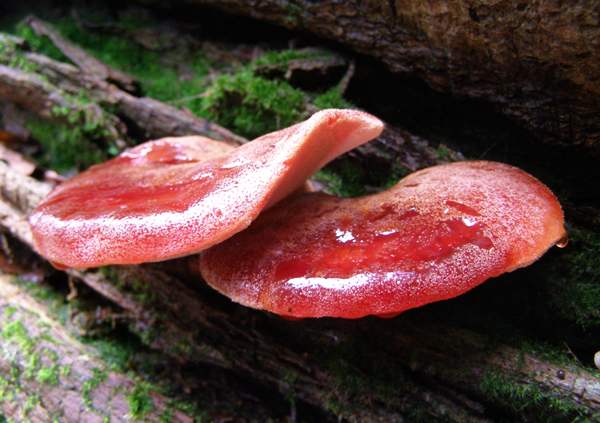
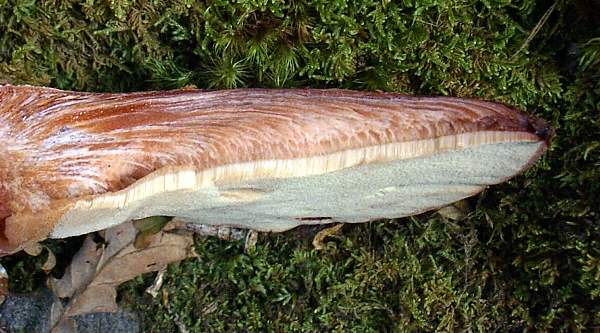
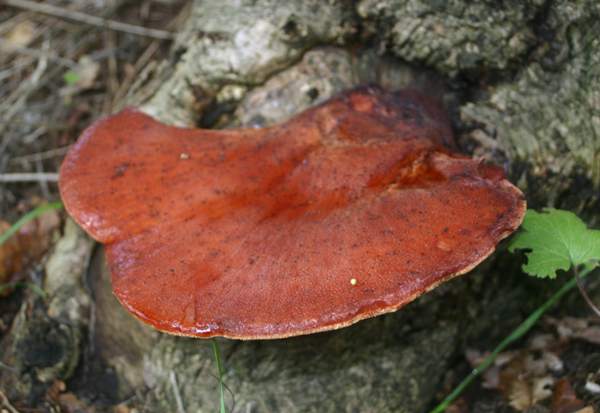
Another common name for this parasitic bracket is the Ox Tongue fungus. Oak timber that has been infected with this parasite is greatly valued by wood turners and cabinet makers, who sometimes refer to it as 'Brown Oak'. If you cut through the flesh of Fistulina hepatica, the Beefsteak Fungus, it certainly does look like a slice of prime beef; unfortunately the taste is not as good as the appearance. Young specimens are rather more palatable, and are best simmered slowly to soften the flesh.
Distribution
Widespread and fairly common throughout Britain and Ireland, Beefsteak Fungus is found throughout mainland Europe and in parts of North America (where it is sometimes referred to as the Ox Tongue Fungus.) In Britain and Europe, Fistulina hepatica is the only known species in this genus, although in tropical climes several other Fistulina fungi have been recorded.
Taxonomic history
Described in 1784 by Jacob Christian Schaeffer, who named it Boletus hepaticus, this common bracket fungus was given its present scientific name in 1792 by William Withering (1741 - 1749), a British botanist best known for his discovery of the active ingredient in a Foxglove-derived herbal remedy that was shown to have a marked positive effect on sufferers from dropsy (a heart condition). Nowadays we know that substance as digitalis.
Fistulina hepatica is the type species of the genus Fistulina.
Etymology
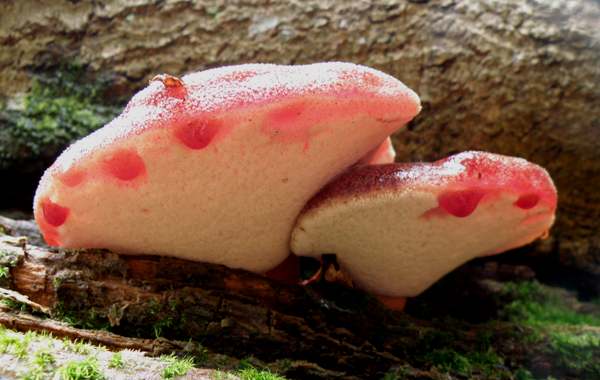
Fistulina, the genus name of the Beefsteak Fungus, means 'with little pipes or tubes'. What makes Fistulina fungi different from other polypores is that the walls of each tube are separate rather than being shared with neighbouring tubes. The specific name hepatica is a reference to the liver-like appearance of mature Beefsteak Fungus brackets.
Fungi in the genus Fistulina are distinguished by having tubes that are clearly separated from their neighbours. In contrast most other polypores have tubes that are securely fused to one another. (In northern Europe Beefsteak Fungus is the only Fistulina species we are likely to see.)
Identification guide
 |
This bracket is commonly known as the Beefsteak fungus because it looks so much like raw meat and, when cut, bleeds quite convincingly too. Unfortunately, as an edible species it does not really live up to its good looks. |
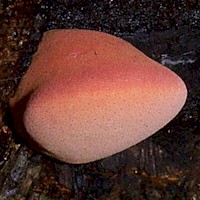 |
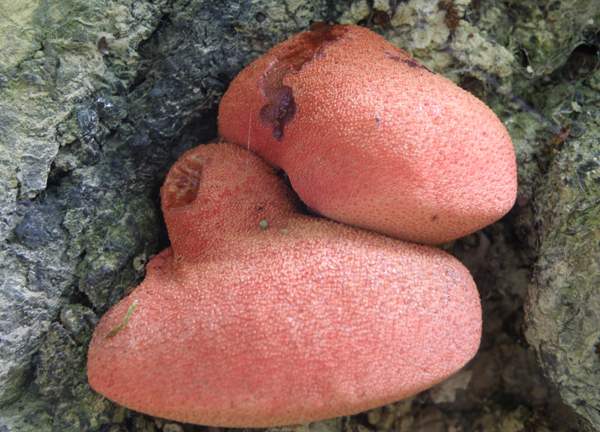
DescriptionThis very young fruiting body is only 5cm across and looks more like a strawberry than a liver, but when it is fully developed it will be much larger and shaped even more like a liver or an ox tongue. The upper surface of a Beefsteak Fungus gradually turns deep red and develops a rough warty surface. |
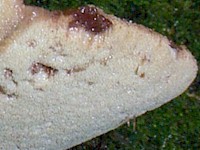 |
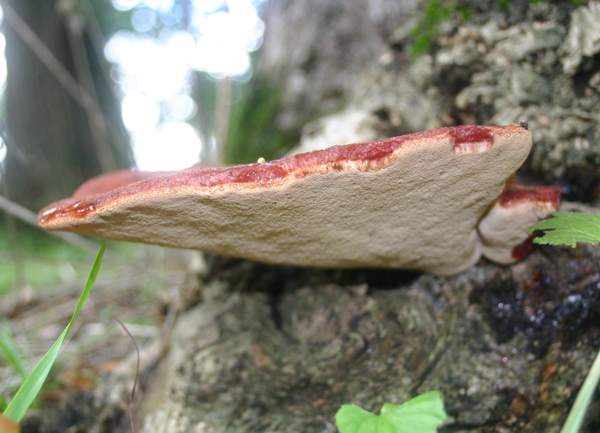
Tubes and PoresThe straw-yellow pores of Fistulina hepatica become reddish-brown as the fruiting body ages; they bruise deep red-brown. It is very easy to separate the tubes which, unlike those of many other polypores, are not bonded together. The brackets of Fistulina hepatica, the Beefsteak Fungus, range from 10 to 25cm across and 3 to 6cm thick when fully mature. |
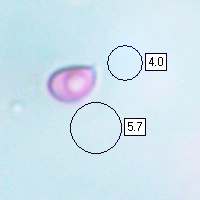 |
SporesOvoid, smooth, 4.5-6 x 3-4µm. Show larger imageSpores of Fistulina hepatica, Beefsteak Fungus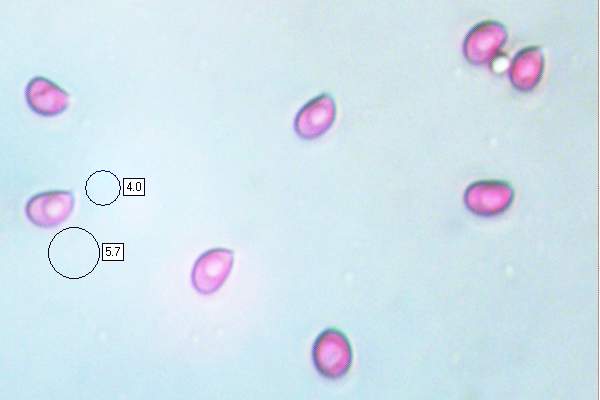 Spore printPale pinkish yellow. |
Odour/taste |
Bitter, acidic taste; no distinctive odour. |
Habitat & Ecological role |
Fistulina hepatica brackets usually occur low down on the trunks of trees - most commonly oaks and sweet chestnuts - and it is quite common for them to emerge from the trunks or roots of fallen trees long after the tree itself is leafless and dead. |
Season |
July to October in Britain and Ireland; not persisting through the winter. |
Similar species |
Inonotus hispidus is a similar large reddish-orange bracket with a hairy upper surface; it occurs most often on dead and dying oak and apple trees. |
Culinary Notes
When young and fresh, the tender fruitbodies of Fistulina hepatica are edible. Although when sliced into strips they look very much like beef steaks (as seen in the illustration on the left), they are rather acidic and slightly bitter, and they do not taste at all like beef.
It would be a big mistake to order your meal of Beefsteak Fungus to be cooked 'medium-rare', as even when young and fresh these tough fungi require a lot of cooking before they are tender enough to eat.
Reference Sources
Mattheck, C., and Weber, K. Manual of Wood Decays in Trees. Arboricultural Association 2003.
Fascinated by Fungi, 2nd Edition, Pat O'Reilly 2016, reprinted by Coch-y-bonddu Books in 2022.
Courtecuisse, R. (1999) Collins guide to the mushrooms of Britain and Europe. HarperCollins Publishers, London.
Dictionary of the Fungi; Paul M. Kirk, Paul F. Cannon, David W. Minter and J. A. Stalpers; CABI, 2008
Taxonomic history and synonym information on these pages is drawn from many sources but in particular from the British Mycological Society's GB Checklist of Fungi.
Fascinated by Fungi. Back by popular demand, Pat O'Reilly's best-selling 450-page hardback book is available now. The latest second edition was republished with a sparkling new cover design in September 2022 by Coch-y-Bonddu Books. Full details and copies are available from the publisher's online bookshop...