Your 2,300-page Wildlife Window on the World Wide Web
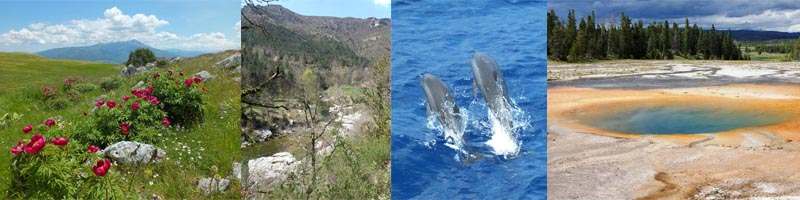
Spring, and lighter evenings...
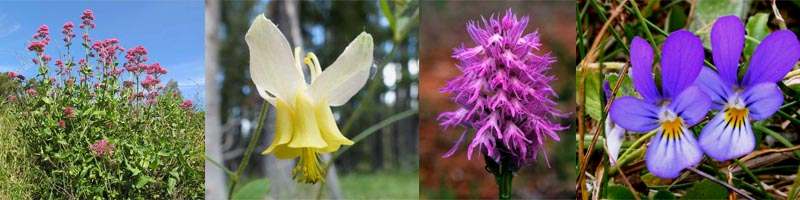
Now that spring wildflowers are appearing throughout Britain and Europe, we wish all who visit the First Nature website interesting and enjoyable walks on the wildside. We also send a special thank you to our supporters, whose kind donations have helped us cover the cost of keeping this resource freely available online. With your continuing support, we will try to keep First Nature going, regularly updated and free from intrusive pop-up advertising for as long as we possibly can. Pat and Sue
Here's news of our latest ebooks...
... the proceeds of which help keep the First Nature website online and free from intrusive adverts as well as supporting the conservation work of environmental charities. Details...
What? No more printed books from First Nature?
We no longer oublish printed books, and we have donated all remaining stock to raise money for the conservation work of Plantlife, the Wild Trout Trust and other environmental charities.
Wild orchids are now flowering in Wales
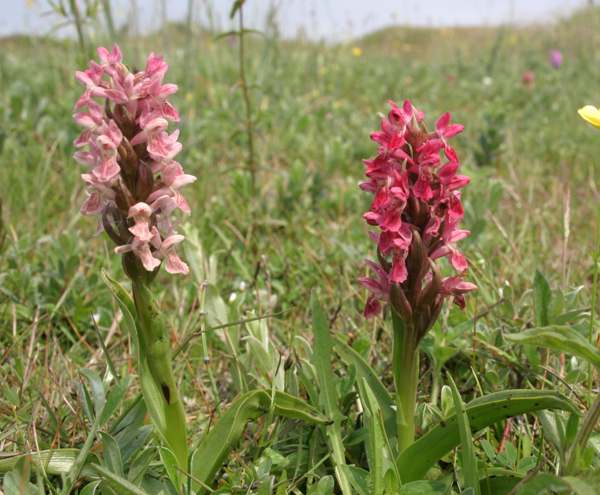
From April through to the end of August, a succession of wonderful wild orchids can be seen blooming in Wales. All you need to know is which species occur when and, most importantly where.
Wild orchids don't grow evenly everywhere, and that's particularly true of Wales, parts of which have very little of the kinds of habitats that these sensitive wildflowers require. Fortunately, there are are quite a lot of really productive hotspots (but many more orchid notspots!). Why waste time and effort searching in vain? When time is precious, being accompanied by an authoritative guide makes all the difference.
That's where having Sue Parker's highly-acclaimed book Wild Orchids of Wales - how, when and where to find them (the hardback edition sadly no longer in print) is so helpful. It has recently been fully updated and republished as an ebook. A full set of five-star reviews testify to the value of this beautifully-illustrated guide, now even better value at a third of the original printed-book price.
Wild orchids are already flowering in the Algarve
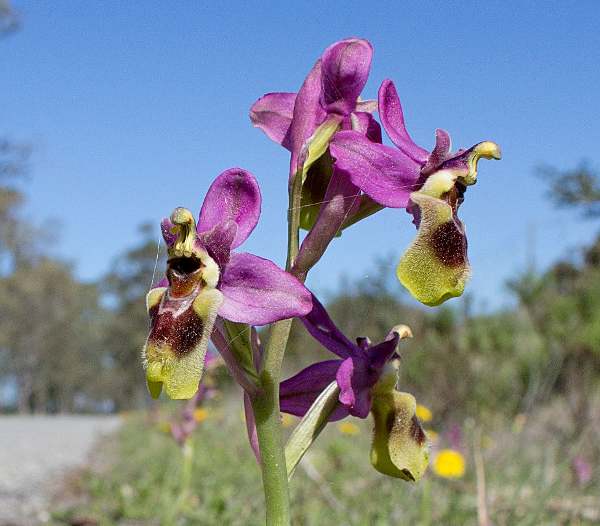
From late December through to the end of May, a succession of wonderful wild orchids can be seen blooming in Portugal's famous Algarve Region. All you need to know is which species occur when and, most importantly where.
Unlike currants in a bun produced by a masterchef, wild orchids are not spread out at all evenly. In the Algarve in particular, there are quite a few really productive hotspots but many more totally barren notspots. You can waste a lot of time and effort searching in vain, but if your holiday hours are precious having an authoritative guide makes all the difference.
Now, Sue Parker's highly-acclaimed book Wild Orchids of the Algarve, how, when and where to find them (the hardback edition sadly no longer in print) has been fully updated and republished as an ebook. A plethora of five-star reviews testify to the usefulness of this beautifully-illustrated guide, now even better value at a third of the original printed-book price.
Microscopy for Amateur Mycologists
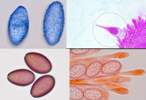
It's amazing how much more you can learn about fungi if you have access to a microscope. Our no-jargon Online Guide to Mushroom Microscopy has all the essential information about choosing and using a compound microscope, selecting chemical stains, preparing slides etc to help you get started.
There are also examples of the microscopic 'characters' cited in identification keys. More details...
Focus on Ascomycetes
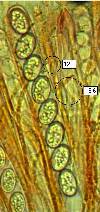
Ascomycetes are fascinating, especially when viewed with a microscope. Here the spores of the Eyelash Fungus Scutellaria scutellata can be seen packed in sets of eight into the asci tubes. The same image in higher magnification can be seen on our Eyelash Fungus page.
Pat O'Reilly's book Fascinated by Fungi contains a very useful introduction to fungal microscopy.
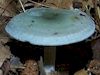
Blue is not a colour normally associated with mushrooms, but there are a few striking blue species. Pictured here is one that makes itself obvious in another way too: the Aniseed Funnel Clitocybe odora can be found by 'following your nose'! See our Sortable Fungi Index for pictures and identification details for more than 770 fascinating fungi species.
Note on terminology
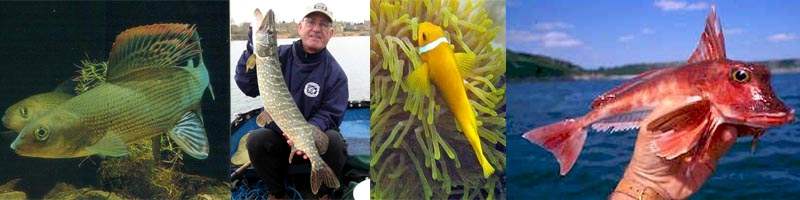
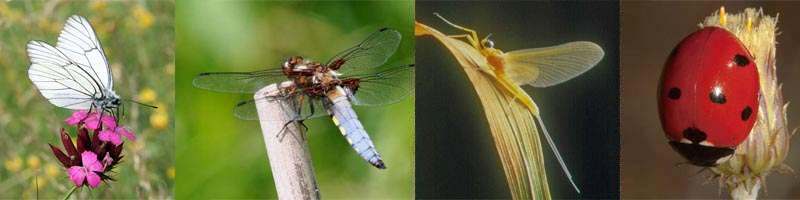
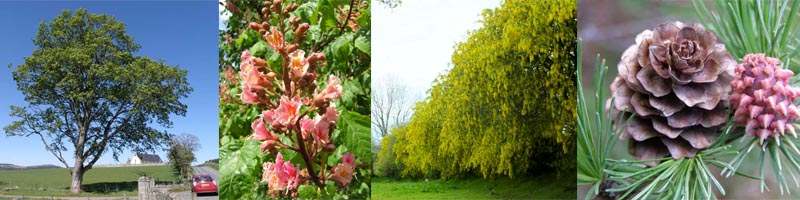
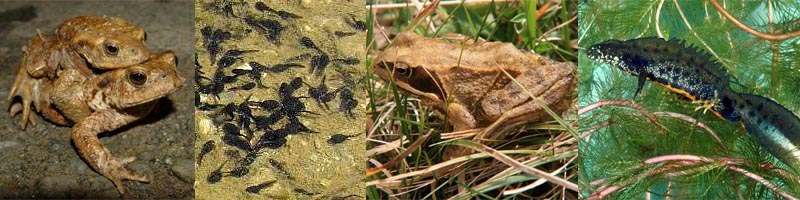
We use the term wildflowers where some people still write wild flowers as two words; however, whether you prefer wildflowers or wild flowers we are sure you will find many flower species of interest in our wildflower pages. Similarly with fungi: some people call all edible fungi mushrooms, using the term toadstools to denote inedible of poisonous fungi. Others reserve the term mushroom for Agaricus species such as field mushrooms. We use the term mushroom to describe any cap-and-stem fungi, whereas brackets, crusts, puffballs and other non-mushroom-shaped types of fungi are referred to simply as fungi. To many people, wildlife means animals such as birds, mammals and insects. Are wildflowers (or wild flowers) wildlife? They are living things, and part of Nature; we therefore use wildlife to imply all living creatures, whether animals (including mammals, birds, insects, reptiles, amphibians, fishes etc), plants such as wildflowers, trees, mosses and other 'lower plants' as well as fungi, lichens and slime moulds.


Help more people learn about and enjoy nature...
We are always pleased to receive your suggestions, corrections, pictures and donations to help keep First Nature online and free from intrusive adverts...