Maianthemum bifolium - False Lily of the Valley
Phylum: Magnoliophyta - Class: Equisetopsida - Order: Asparagales - Family: Asparagaceae
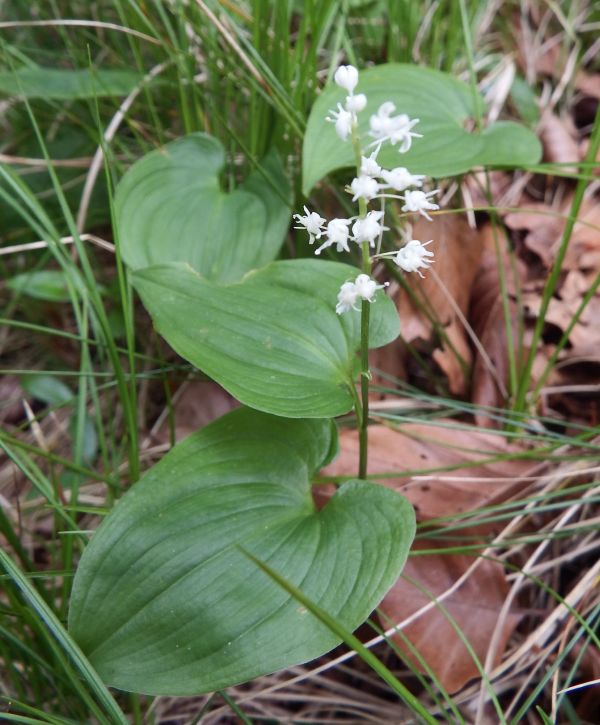
This pretty little wildflower is a very rare sight in Britain, and it is uncertain whether the few plants that exist in the wild there are truly native or were introduced in the distant past.
Description
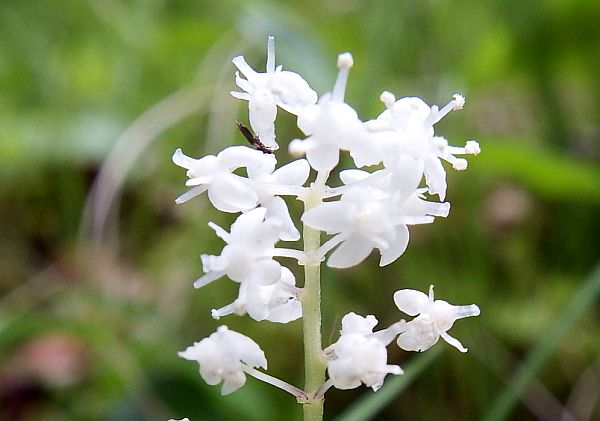
Also referred to as May Lily or Mayflower, this perennial member of the Asparagus family grows in colonies from spreading rhizomes. Typically, plants reach a height of about 10 to 15cm. With normally just two glossy, heart-shaped leaves, each stem has a spike of tiny (a mere 3 to 5mm in diameter), stellate (star-shaped) white or pale cream flowers, which are followed by poisonous (to humans, at least) red berries.
Distribution
Growing wild in much of western and central Europe, including Slovenia, as well as parts of Asia, this plant has been introduced to most other temperate countries. In Britain, where Maianthemum bifollium is classified as 'vulnerable', isolated colonies that may be native still exist in Lincolnshire, Yorkshire and Durham.
Habitat
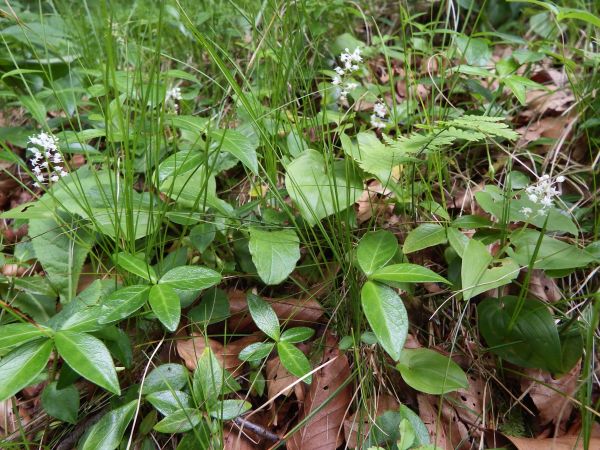
A plant most commonly seen in shady deciduous woodlands and particularly on woodland edges and sheltered stream banks, False Lily of the Valley needs moist, well-drained humus-rich soil and favours neutral to slightly acidic areas.
Flowering times
False Lily of the Valley can be seen in bloom from April to June. The specimens shown on this page were photographed in Slovenia in early June.
Etymology
The genus name Maianthemum comes from ancient Greek words - maios, the month of May, and anthos meaning flower. The specific epithet bifolium comes from Latin and refers to the (usually) two leaves low down on each flowering stem.


Please Help Us: If you have found this information interesting and useful, please consider helping to keep First Nature online by making a small donation towards the web hosting and internet costs.
Any donations over and above the essential running costs will help support the conservation work of Plantlife, the Rivers Trust and charitable botanic gardens - as do author royalties and publisher proceeds from books by Pat and Sue.