Scorzonera purpurea - Purple Viper's-grass
Phylum: Magnoliophyta - Class: Equisetopsida - Order: Asterales - Family: Asteraceae
Description
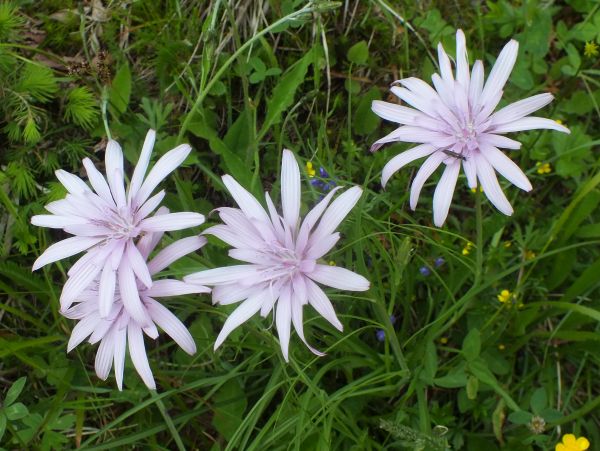
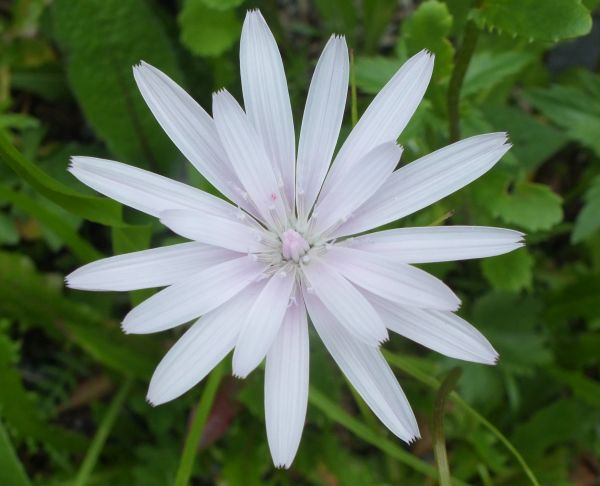
Purple Viper's-grass, a member of the Daisy family, is characterised by its thin, strap-like leaves and hawkweed-like flower heads typically 5cm in diameter. The compound flowers of Purple Viper's-grass are usually pale mauve or pale purple but sometimes pale rose-purple. This plant is related to the species Scorzonera hispanica (Salsify) which has edible roots.
Distribution
The native range of Scorzonera purpurea is central Europe, extending across into Asia.
Habitat
This plant favours sandy loams in warm, sunny locations. Dry meadows, scrubby slopes and woodland edges are often brightened by these delightful wildflowers.
Blooming times
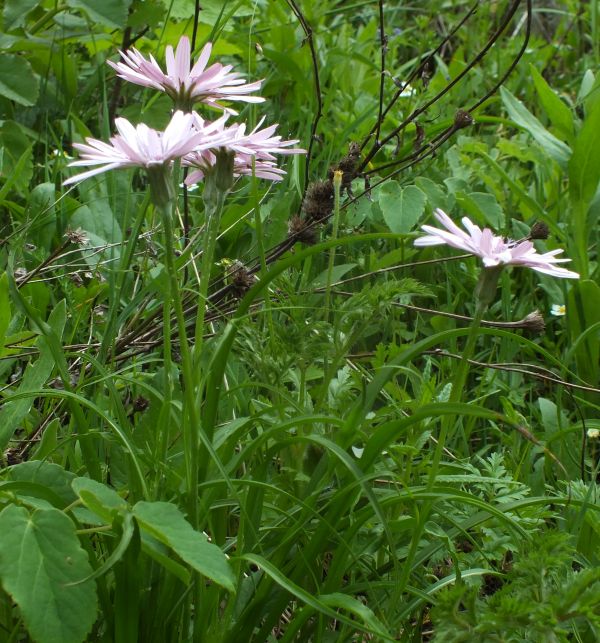
Purple Viper's-grass produces flowers between early May and the end of June, but depending on location occasionally you may see specimens still in bloom in mid July.
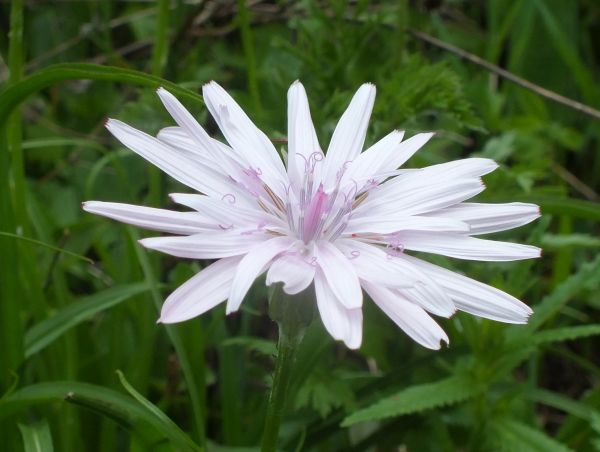
The plants shown on this page were photographed in Slovenia during June.
Etymology
Scorzonera comes from Old French scorzonère, meaning 'black serpent' - a reference to the dark roots of these plants, which because they look like black snakes were used in a traditional antidote to snakebites (whether effective or not!). The common name also reflects this use.
The specific epithet purpurea means 'purple', reflecting the rosy-purple colour that is typical of the flowers.


Please Help Us: If you have found this information interesting and useful, please consider helping to keep First Nature online by making a small donation towards the web hosting and internet costs.
Any donations over and above the essential running costs will help support the conservation work of Plantlife, the Rivers Trust and charitable botanic gardens - as do author royalties and publisher proceeds from books by Pat and Sue.