Phaeotremella foliacea Pers. Wedin, J.C. Zamora & Millanes - Leafy Brain
Phylum: Basidiomycota - Class: Tremellomycetes (insertae sedis) - Order: Tremellales - Family: Tremellaceae
Distribution - Taxonomic History - Etymology - Identification - Culinary Notes - Reference Sources
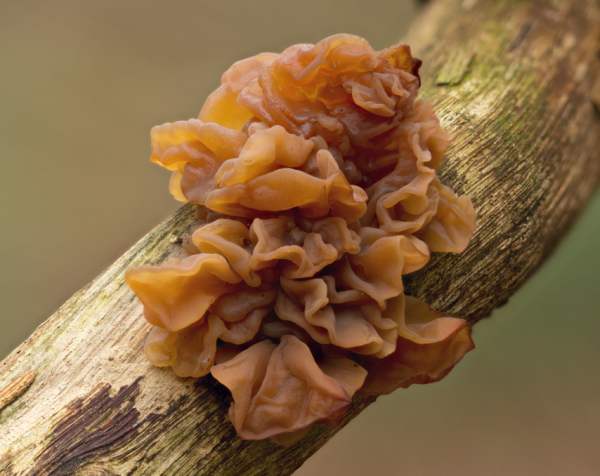
We are grateful to Adam Pollard-Powell for alerting us to the fact that until 2016 the formerly-accepted scientific name Tremella foliacea covered what is now known to be a complex of parasitic species; they are differentiated macroscopically by the host upon which they feed. This page covers three species:
Phaeotremella frondosa is parasitic on Stereum hirsutum and some other Stereum species that occur on the timber of broadleaf trees.
Phaeotremella foliacea is parasitic on Stereum sanguinolentum, which occurs on conifer timber.
Phaeotremella fimbriata is parasitic on Stereum rugosum, which occurs on the timber of broadleaf trees.
Note: it appears likely that our pictures are of Phaeotremella species that occur on hardwood substrates and not coniferous timber:
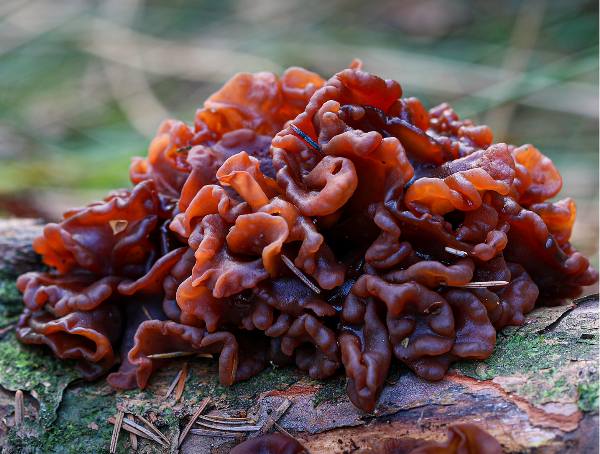
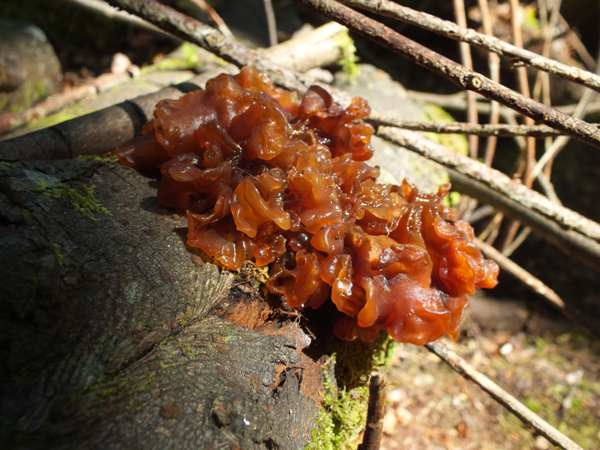
When fully developed Phaeotremella jelly fungi are even more contorted than their close relatives Tremella mesenterica and Tremella aurantiaca. In dry weather these fungi shrivel to hard blackish crusts, in which state they are much more difficult to spot. When it rains the fruitbodies rehydrate and turn translucent again.
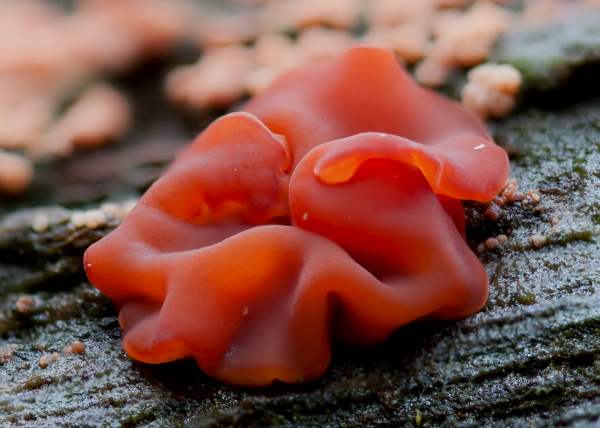
Late summer and autumn are the best times to look for these jelly-like fungi which ar capable of sexual and asexual reproduction: they propagate not only via basidiospores but also by producing conidiospores.
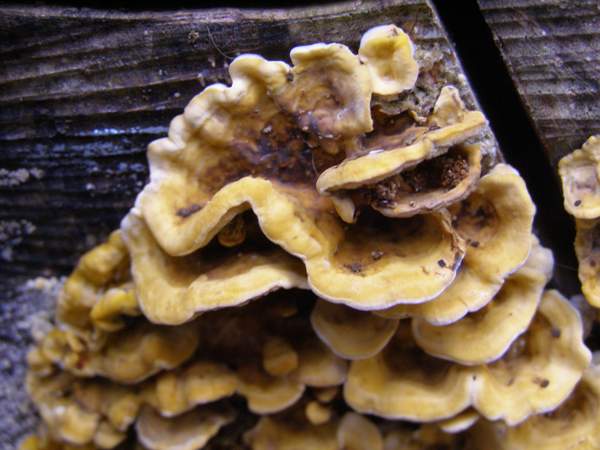
Like the closely-related Tremella aurantia, Leafy Brain, Phaeotremella frondosa grows on dead wood that has been attacked by the wood-rotting fungus Stereum hirsutum, commonly referred to as Hairy Curtain Crust. Stereum hirsutum, shown above, is a conspicuous and very common species whose fruitbodies can be found throughout the year; this is the fungal host upon which this jelly fungus feeds.
Distribution
Phaeotreemella fungi are fairly common throughout Britain and Ireland and are found also in other European countries from Norway right down to Portugal. They are also recorded in most other temperate regions including North Africa, Asia, Australia and both North America and South America.
Taxonomic history
The jelly fungus now known as Phaeotremella foliacea was originally described in 1800 by Christiaan Hendrik Persoon, who called it Tremella foliacea, but it's likely that most specimens given that name are incorrectly identified.
Phaeotremella foliacea has many synonyms including Tremella foliacea Pers.,Tremella fimbriata Pers., Gyraria foliacea (Pers.) Gray, Tremella succinea Pers., Tremella nigrescens Fr., Ulocolla foliacea (Pers.) Bref., Exidia foliacea (Pers.) P. Karst., Phaeotremella pseudofoliacea Rea, and Tremella foliacea var. succinea (Pers.) Neuhof.
Etymology
Phaeotremella, the generic name means dark coloured and trembling - a reference to the usuaally dark brown and wobbly-jelly-like structure of fungi within this grouping, The specific epithet foliacea means folded or wrinkled like leaves.
Identification guide
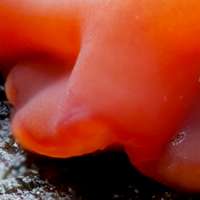 |
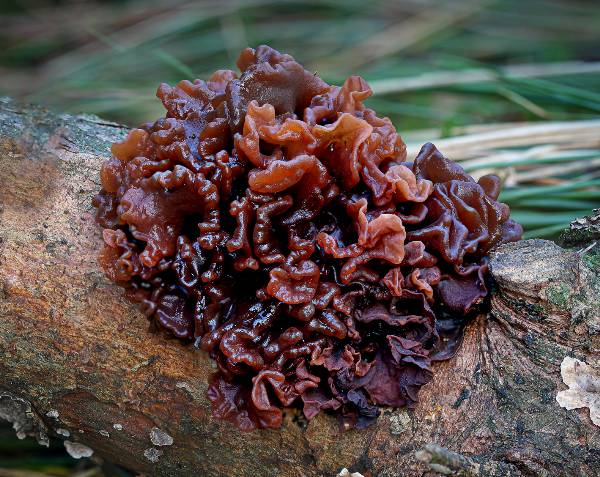
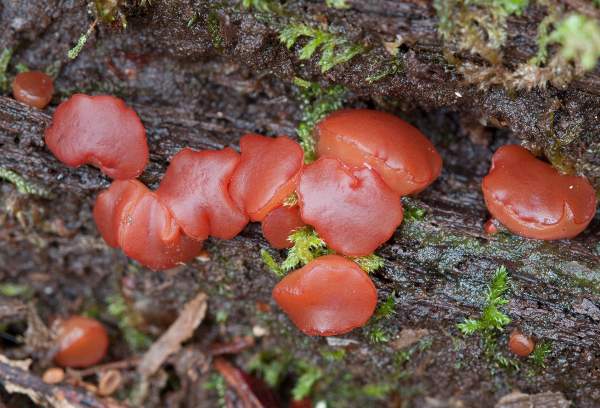
FruitbodyInitially disc-like, the fruitbody soon develops irregular convoluted folds with rounded margins. Individual fruitbodies grow to between 2 and 20cm across. The leaf-like clusters of folded lobes are usually reddish-brown or pale pinkish-brown but sometimes reddish orange; gelatinous when damp, turning dark and shriveling to an inconspicuous fraction of its former size during very dry weather. |
BasidiaLongitudinally septate; 2-spored and 4-spored, with long sterigmata. |
|
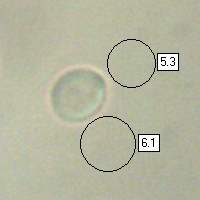 |
SporesSubglobose to broadly ellipsoidal, smooth, thin-walled, 6.5-10 x 4.5-8µm, inamyloid.
Spores of Phaeotremella foliacea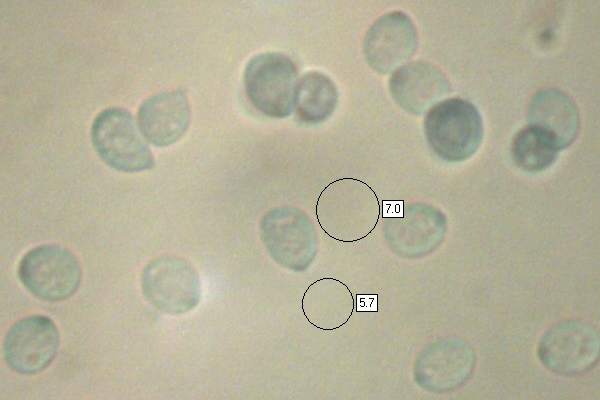 Spore printWhite. |
Odour/taste |
Not distinctive. |
Habitat & Ecological role |
This jelly fungus grows on dead timber of broadleaf trees and conifers. It is not the dead timber that Tremella foliacea consumes but rather a kind of bracket or crust fungus that itself has been feeding on the wood. Tremella foliacea must therefore be - Classed as a parasitic rather than saprobic species. In Britain (and probably elsewhere) it attacks Hairy Curtain Crust Stereum hirsutum. |
Season |
Found throughout the year, this fungus is most visible in autumn and winter. |
Similar species |
Tremella aurantia - recently renamed Naematelia aurantia (Schwein.) Burt. - is also parasitic on Stereum hirsutum; its fruitbodies are yellow-orange and usually less tightly folded than those of Phaeotremella foliacea. Tremella mesenterica is parasitic on Peniophora crust fungi, which occur on dead hardwoods, particularly oaks. Its spores are broadly ellipsoidal. |
Culinary Notes
Some authorities say that this is an edible but very poor fungus, but being insubstantial it has no culinary value.
Above: young fruitbodies are disc-like but they will become contorted and develop multiple folds as they expand and approach maturity.
Reference Sources
Fascinated by Fungi, 2nd Edition, Pat O'Reilly 2016, reprinted by Coch-y-bonddu Books in 2022.
Phaeotremella foliacea (Pers.) Wedin, J.C. Zamora & Millanes, in Mycosphere 7(3): 296 (2016)
British Mycological Society, English Names for Fungi
Dictionary of the Fungi; Paul M. Kirk, Paul F. Cannon, David W. Minter and J. A. Stalpers; CABI, 2008
Taxonomic history and synonym information on these pages is drawn from many sources but in particular from Index Fungorum.
Acknowledgement
This page includes pictures kindly contrinuted by David Kelly and Tony Mellor.

Fascinated by Fungi. Back by popular demand, Pat O'Reilly's best-selling 450-page hardback book is available now. The latest second edition was republished with a sparkling new cover design in September 2022 by Coch-y-Bonddu Books. Full details and copies are available from the publisher's online bookshop...