Spilostethus pandurus Milkweed Bug
Phylum: Arthropoda - Class: Insecta - Order: Hemiptera - Family: Lygaeidae
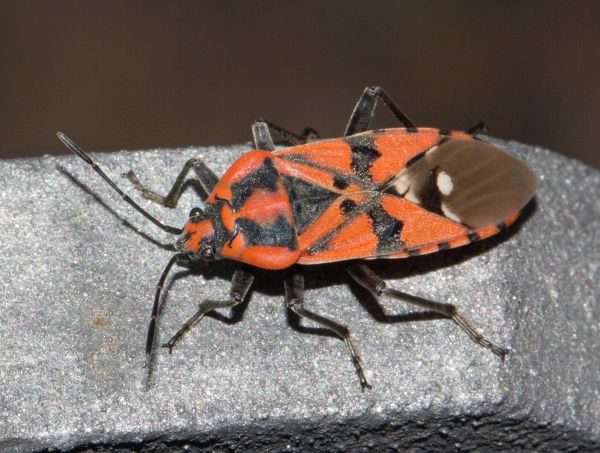
Also referred to as the Panda Soldier Bug, this seed bug is a rare find in Britain and not yet confirmed as breeding there.
Description
The two wavy stripes on the pronotum and the bold white spot on the winng membrane make for easy identification and avoid confusion with the otherwise similar Cinnamon Bug Corizus hyoscami. Adults of both genders are typically 15mm long.
Distribution
This visually attractive but smelly bug (when handled it emits a stinky substance as a defence mechanism) is common and widespread in southern Europe, North Africa, the Middle East and Asia. The specimen shown here was found in the Algarve region of Portugal.
Habitat
Milkweed Bugs are most often seen in warm, sunny places such as agricultural fields and meadows, gardens and scrubby wasteland.
Lifecycle
These bugs feed on the seeds of a wide variety of plants including tomatoes, sunflowers, cotton and other valuable crops; they tend to favour plants of the family Apocynaceae, which includes various kinds of Milkweed. There are several broods per year, with larvae hatching from eggs and going through five larval instars (stages) before becoming adults. There is no pupal stage.
Acknowledgements
This page includes picture content kindly contributed by Rob and Jane Petley-Jones.

Excited by rivers and streams? So are we, and we're pretty sure you would find the Winding River Mystery trilogy of action-packed thrillers gripping reading too. Dead Drift, Dead Cert, and Dead End are Pat O'Reilly's latest river-based novels, and now they are available in ebook format. Full details on our website here...
Buy each volume in ebook format for only £2.47 on Amazon... Paperbacks also available on Amazon at £6.95 each. All proceeds go towards keeping the First Nature website online.
Please Help Us: If you have found this information interesting and useful, please consider helping to keep First Nature online by making a small donation towards the web hosting and internet costs.
Any donations over and above the essential running costs will help support the conservation work of Plantlife, the Rivers Trust and charitable botanic gardens - as do author royalties and publisher proceeds from books by Pat and Sue.