Carlina acaulis - Stemless Carline Thistle
Phylum: Magnoliophyta - Class: Equisetopsida - Order: Asterales - Family: Asteraceae
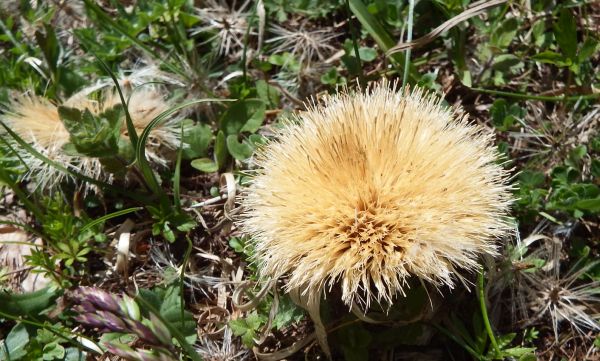
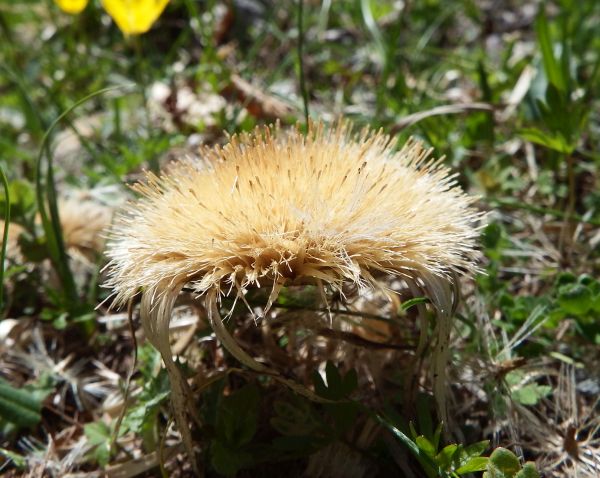
The flowers of carline thistles, of which there are several species, appear to be 'dead' even when they are young and fresh. Stemless Carline Thistle has either no stem (sessile) or a very short stem.
Description
Stemless Carline Thistle is a spiny perennial plant with distinctive brown and gold daisy-like compound flower heads. The deeply lobed spiny leaves form a rosette..
Distribution
Not native to Britain, the Stemless Carline Thistle is moderately abundant across central and southern Europe, much of North Africa and in parts of western Asia.
Habitat
Carline Thistle grows on dry alkaline subalpine grassland and sometimes on rocky slopes.
Blooming Times
The flowers of Stemless Carline Thistle can be seen from June to September. The dead flower heads often persist into the following spring.
Uses
A wide range of insects, including bees and particularly butterflies, appear to be very fond of the flowers of Stemless Carline Thistle.
Etymology
Carlina, the genus name, honors the Holy Roman Emperor Charles V (1500 - 1558), or Charlemagne, who legend has it used this plant to cure his army of the plague. The specific epithet acaulis comes from Latin and means 'without a stem'.

Sue Parker's latest ebook is a revised and enlarged edition of Wild Orchids in The Burren. Full details here...
Buy it for just £5.95 on Amazon...

Please Help Us: If you have found this information interesting and useful, please consider helping to keep First Nature online by making a small donation towards the web hosting and internet costs.
Any donations over and above the essential running costs will help support the conservation work of Plantlife, the Rivers Trust and charitable botanic gardens - as do author royalties and publisher proceeds from books by Pat and Sue.