Lunaria adiviva - Perennial Honesty
Phylum: Magnoliophyta - Class: Equisetopsida - Order: Brassicales - Family: Brassicaceae
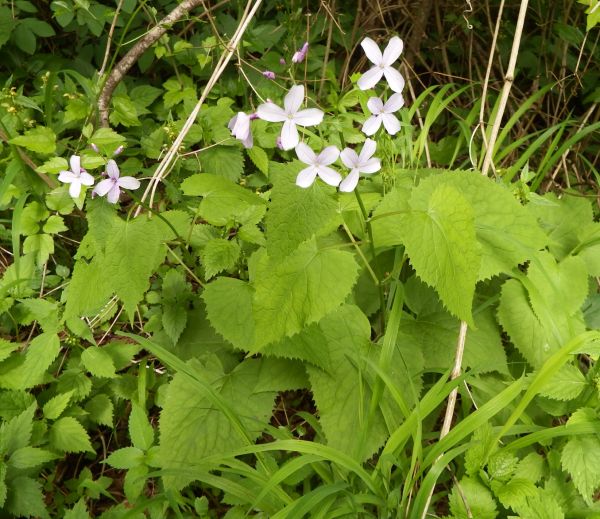
Less common in the wild than its annual relative Lunaria annua, Perennial Honesty also has sweetly-scented flowers.
Description
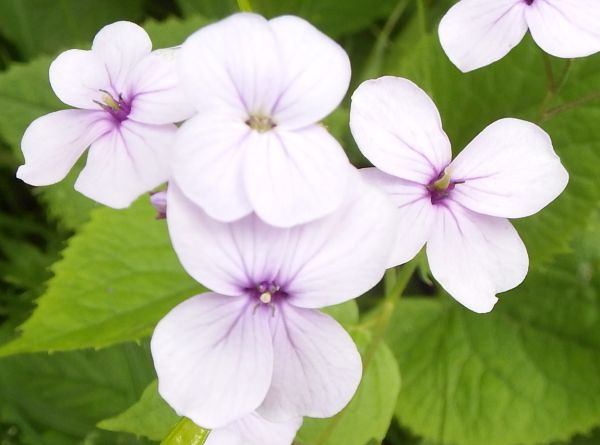
Perenial Honesty is much taller than most spring vegetation and so is very easy to spot when in flower. These plants make wonderful floral displays, usually pale purple or mauve but sometimes pure white, that are visible from afar. In autumn they are just as conspicuous, because of their translucent eliptical seedpods with pointed tips. When fully dried out, the seed pods shimmer in the winter sunlight and rustle in the breeze.
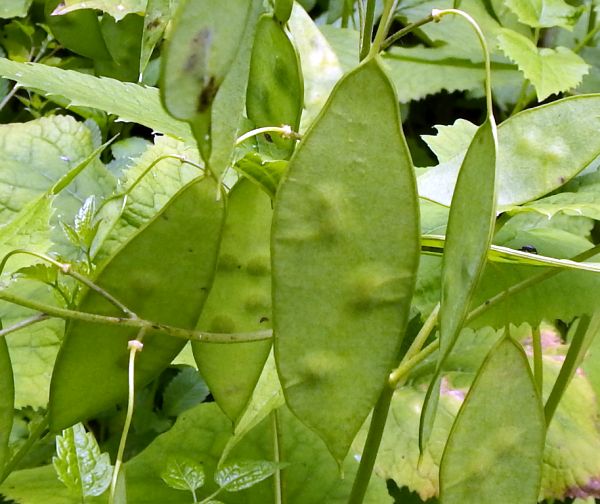
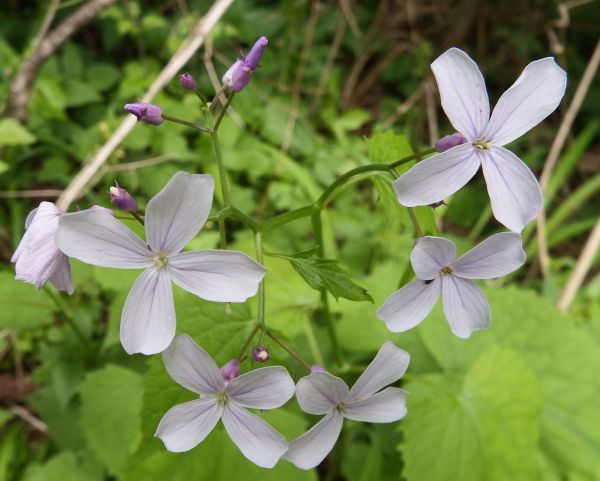
Typically 60 to 100cm tall, Perennial Honesty has square, usually hairy stems and large heart-shape or triangular leaves with serrated edges. Unlike Annual Honesty Lunaria annua, both the lower and upper leaves of Perennial Honesty have stalks. Leaves are are serrate and up to 8cm long, and they alternate up the sparsely branching stems, which terminate in racemes of pale lilac (ovccasionally white) four-petalled flowers typically 2.5cm across.
Distribution
Common and widespread throughout most of mainland Europe, Perennial Honesty also grows in the wild in western Russia. It is an introduced plant in many other temperate countries,where it is valued for its scented flowers and for its shining seed pods that are used in dried flower arrangements. In parts of the USA and Canada this alien species has escaped into the wild and is considered a nuisance weed.
Habitat
Perennial Honesty thrives in partial shade beneath hedgerows and on woodland edges as well as in sheltered ditches and stream banks. This plant favours rich, damp alkaline soils.
Flowering times
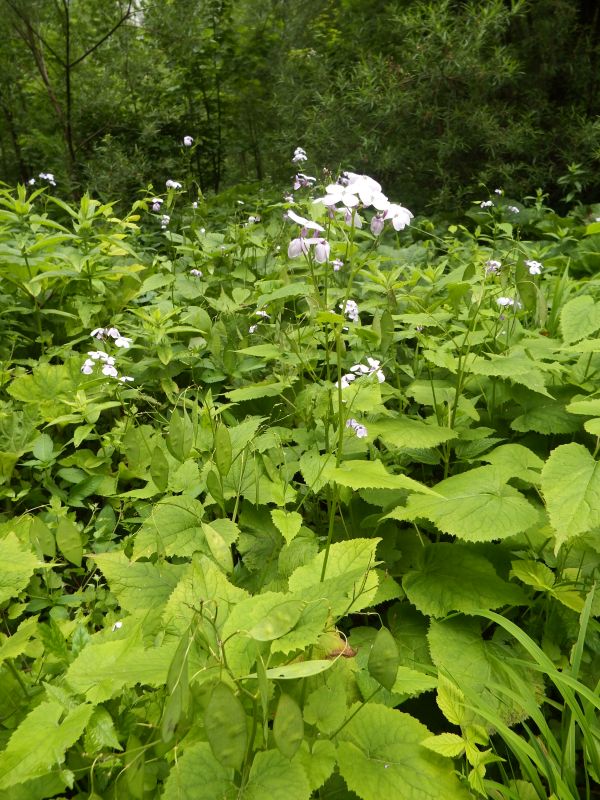
Lunaria adiviva can usually be seen blooming from May to July. The specimens shown on this page were photographed in Slovenia in early June.
Etymology
Lunaria, the genus name, means moon-shaped and is a reference to the dried seed pods, which (apart from being oval and, unlike those of annual Honesty, having pointed tips!) resemble a full moon with it shadowy surface features. The specific epithet adiviva comes from Latin and means 'revived', reflecting the fact that these are plants that can 'come alive again' year after year.
Uses
Apart from their popularity as garden flowers, Perennial Honesty and it annual relative Honesty are much loved by Orange-tip butterflies and, in southern France for example, by the lovely Provencal Orange-tip.

Sue Parker's latest ebook is a revised and enlarged edition of Wild Orchids in The Burren. Full details here...
Buy it for just £5.95 on Amazon...

Please Help Us: If you have found this information interesting and useful, please consider helping to keep First Nature online by making a small donation towards the web hosting and internet costs.
Any donations over and above the essential running costs will help support the conservation work of Plantlife, the Rivers Trust and charitable botanic gardens - as do author royalties and publisher proceeds from books by Pat and Sue.