Scorpiurus muricatus - Caterpillar-plant
Phylum: Magnoliophyta - Class: Equisetopsida - Order: Fabales - Family: Fabaceae
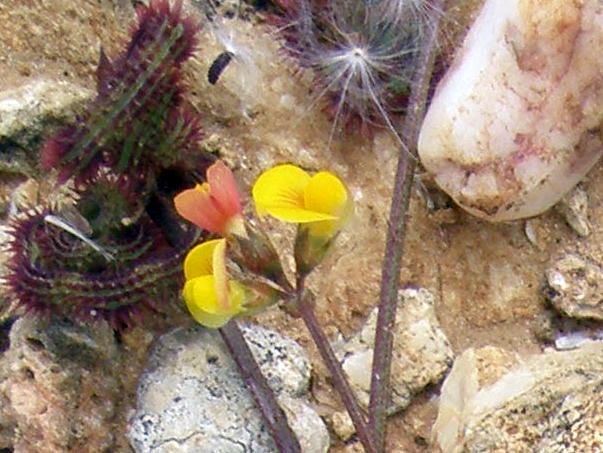
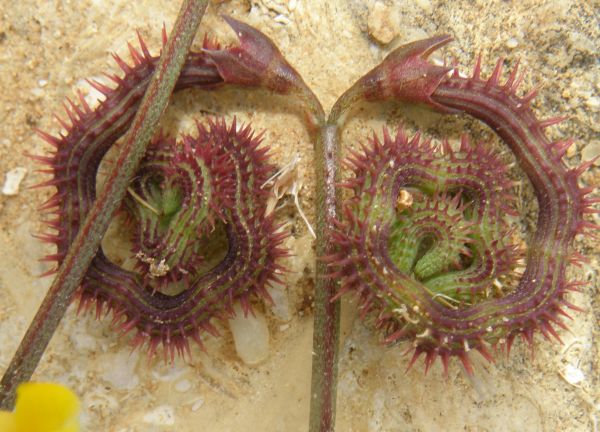
A member of the pea family Fabaceae, the Caterpillar-plant, also referred to as Prickly Scorpion's-tail, is immediately recognisable once the seed pods develop.
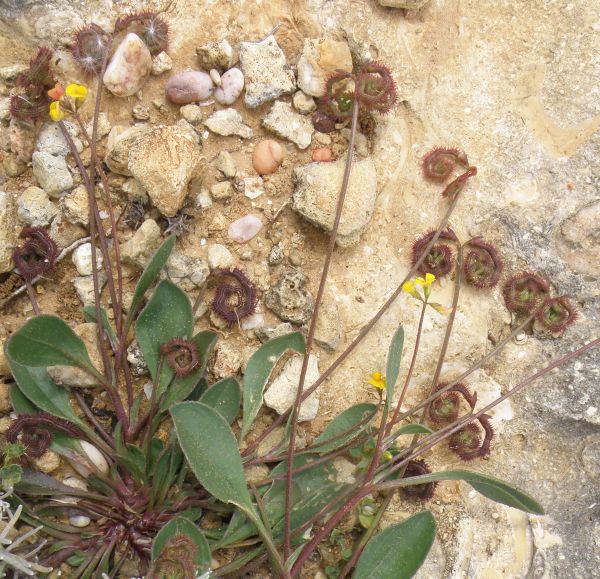
Description
An annual member of the Pea family, Caterpillar-plant usually grows to a height of between 40 and 70cm. The spoon-shaped to lanceolate grey-green leaves are stalked and grow in a basal rosette. The yellow or orange flowers, typical of members of the pea family, are 5 to 10mm long and grow in clusters of two to five on long stalks. The curled seed pods are covered in bristly spines that make them look very much like spiny catterpillars - hence the common name.
Distribution
This plant is found throughout most of southern Europe but it is most plentiful in the Mediterranean region, the Iberian Peninsula and parts of northern Africa.
Habitat
Caterpillar-plant is most often found on disturbed land, fallow farmland, arable field margins, beside coastal footpaths, and in some well-drained meadows. It favours alkaline soils.
Blooming times
You can expect to see this member of the pea family in bloom from late March until the end of July.
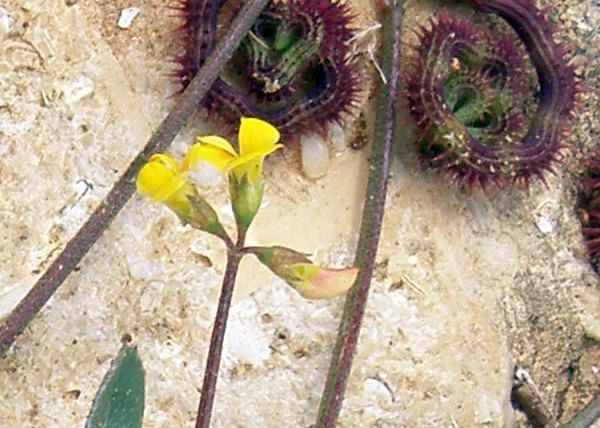
The flowers shown on this page were photographed in the Algarve region of Portugal during April.
Etymology
The genus name Scorpiurus comes from ancient Greek words meaning 'scorpion's tail'. The specific epithet muricatus comes from Latin and means 'spiny'.

Sue Parker's latest ebook is a revised and enlarged edition of Wild Orchids in The Burren. Full details here...
Buy it for just £5.95 on Amazon...

Please Help Us: If you have found this information interesting and useful, please consider helping to keep First Nature online by making a small donation towards the web hosting and internet costs.
Any donations over and above the essential running costs will help support the conservation work of Plantlife, the Rivers Trust and charitable botanic gardens - as do author royalties and publisher proceeds from books by Pat and Sue.