Odonata - Dragonflies and Damselflies
Of all the aquatic insects the dragonflies and damselflies are surely the best known. A few are instantly recognisable, but there are more than forty species in the British Isles and some of them are now very rare. Their irridescent bodies and aerobatic skills make for a fascinating spectacle on bright summer days.
This SORTABLE TABLE has links to larger pictures and information about each species. A Picture Gallery version of this page is also available...
 |
|||
|---|---|---|---|
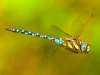 |
Common Hawker | Aeshna juncea | Aeshnidae |
 |
Migrant Hawker | Aeshna mixta | Aeshnidae |
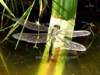 |
Emperor Dragonfly | Anax imperator | Aeshnidae |
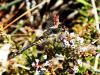 |
Hairy Dragonfly | Brachytron pratense | Aeshnidae |
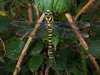 |
Golden-ringed Dragonfly | Cordulegaster boltonii | Cordulegastridae |
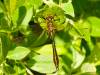 |
Downy Emerald | Cordulia aenea | Corduliidae |
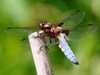 |
Broad-bodied Chaser | Libellula depressa | Libellulidae |
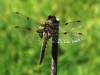 |
Four-spotted Chaser | Libellula quadripunctata | Libellulidae |
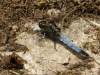 |
Black-tailed Skimmer | Orthetrum cancellatum | Libellulidae |
 |
Keeled Skimmer | Orthetrum coerulescens | Libellulidae |
 |
Black Darter | Sympetrum danae | Libellulidae |
 |
Red-veined Darter | Sympetrum fonscolombii | Libellulidae |
 |
Ruddy Darter | Sympetrum sanguineum | Libellulidae |
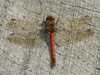 |
Common Red Darter | Sympetrum striolatum | Libellulidae |
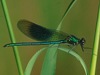 |
Banded Demoiselle | Calopteryx splendens | Calopterygidae |
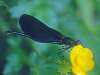 |
Beautiful Demoiselle | Calopteryx virgo | Calopterygidae |
 |
Small Red Damselfly | Ceriagrion tenellum | Coenagrionidae |
 |
Willow Emerald Damselfly | Chalcolestes viridis | Coenagrionidae |
 |
Southern Damselfly | Coenagrion mercuriale | Coenagrionidae |
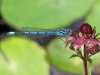 |
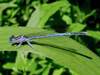
Azure Damselfly | Coenagrion puella | Coenagrionidae |
 |
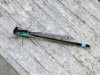
Common Blue Damselfly | Enallagma cyathigerum | Coenagrionidae |
 |
Blue-tailed Damselfly | Ischnura elegans | Coenagrionidae |
 |
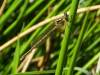
Scarce Emerald Damselfly | Lestes dryas | Lestidae |
 |
Emerald Damselfly | Lestes sponsa | Lestidae |
 |
Large Red Damselfly | Pyrrhosoma nymphula | Coenagrionidae |
Life Cycle
Most damselflies have a one-year life cycle, while dragonflies are longer lived, some taking five years to reach maturity. The eggs, once hatched, become nymphs (also known as naiads), which live among submerged weeds.
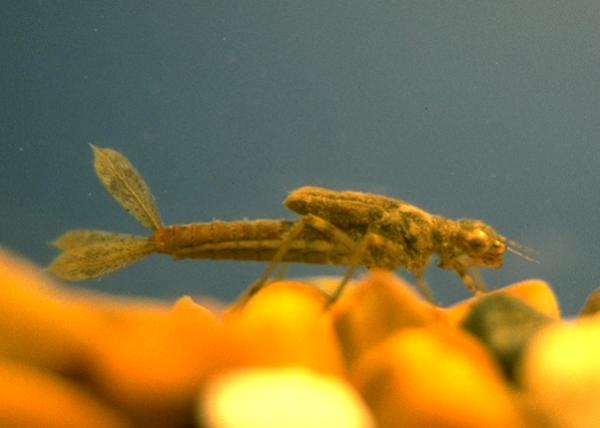
In shallow lakes, the nymphs of damselflies are an important source of food for trout and other fish. Dragonfly nymphs, in contrast, are fierce predators and will attack and kill other aquatic creatures sometimes larger than themselves - we have seen them attack and kill a small newt.
When ready to emerge as adults, the nymphs crawl up weed stems and rest in the sunshine above water level until their outer shucks split to allow the winged adults to emerge. At this stage they are rather dull looking with pallid colouring.
The newly-emerged adults are vulnerable, because they cannot fly until their wings have dried and hardened. They remain very still - for an hour or more in very wet weather; then they take to the air, begin hunting for food (smaller insects) and become increasingly more colourful.
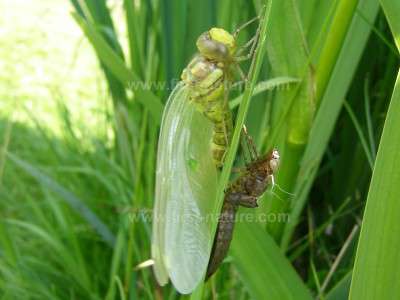
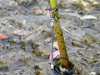
A recently-emerged Aeshnid dragonfly is shown here. The exuvia (the shuck or final nymphal skin from which it emerged) is also visible. Examining marginal plants and looking closely at any exuvia left clinging to stems is a good way of finding out which kinds of dragonflies live in a pond.
Creating a garden pond is a great way of attracting dragonflies and damselflies into your garden. Several species now breed in the small pond we built in our own garden in West Wales. See our illustrated guide to Making a Garden Pond...
Excited by rivers and streams? So are we, and we're pretty sure you would find the Winding River Mystery trilogy of action-packed thrillers gripping reading too. Dead Drift, Dead Cert, and Dead End are Pat O'Reilly's latest river-based novels, and now they are available in ebook format. Full details on our website here...
Buy each volume in ebook format for only £2.47 on Amazon... Paperbacks also available on Amazon at £6.95 each. All proceeds go towards keeping the First Nature website online.
Please Help Us: If you have found this information interesting and useful, please consider helping to keep First Nature online by making a small donation towards the web hosting and internet costs.
Any donations over and above the essential running costs will help support the conservation work of Plantlife, the Rivers Trust and charitable botanic gardens - as do author royalties and publisher proceeds from books by Pat and Sue.