Clinopodium alpinum - Rock Thyme or Alpine Calamint
Phylum: Magnoliophyta - Class: Equisetopsida - Order: Lamiales - Family: Lamiaceae
Until recently, many botansts recorded this plant as Acinos alpina.
Description
Forming dense flowering cushions typically 15 to 25cm tall, Rock Thyme is an evergreen perennial with square woody stems and aromatic oval finely-toothed leaves up to 2cm long. The leaves, which are greyish green and covered in short adpressed hairs, are carried in opposite pairs up the stems.
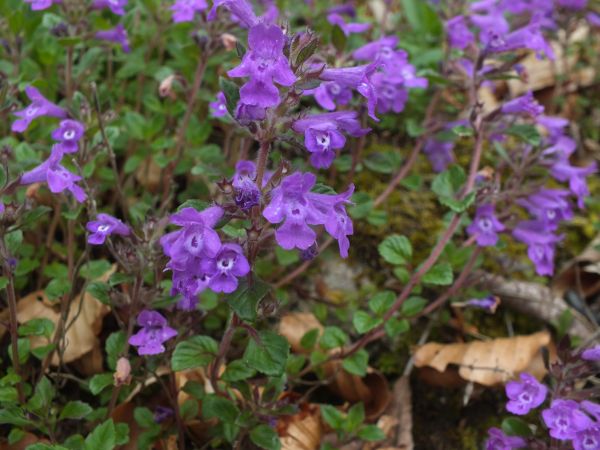
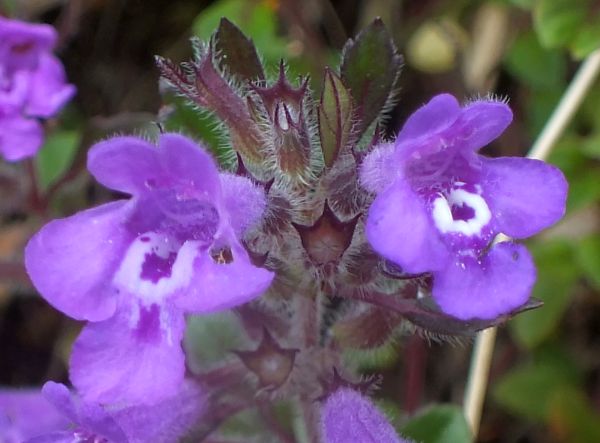
Rock Thyme, also known as Alpine Calamint, has lilac or purple labiate two-lipped flowers, the lower lip being tri-lobed and having a darker purple patch (honey guide) that helps insects to locate the nectar and, in so doing, effect pollination. Patterning on the lower lip is very variable. The individual flowers are 10 to 15mm long and are borne in whorls at the top of the stems and in leaf axils.
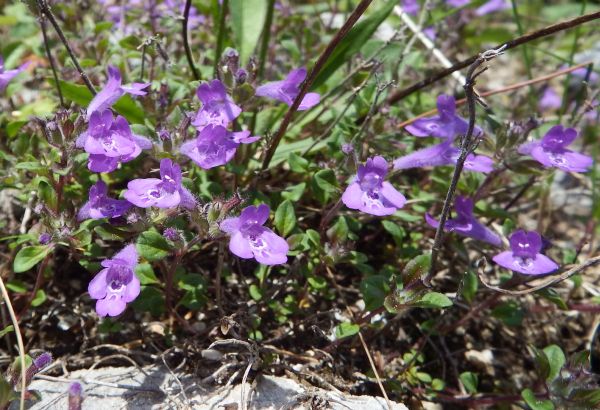
The flowers are hermaphrodite - having both male and female organs - and they are pollinated mainly by bees.
Distribution
This low growing perennial is native to central and southern mainland European countries including France, Spain, Italy, Greece and Slovenia. Its range extends into North Africa and across into parts of western Asia.
Habitat
Rocky alpine scree slopes suit this striking wildflower, which covers places that more rank vegetation cannot colonise. Found mainly in high-elevation subalpine and alpine slopes from about 500 to 2300 metres above sea level, this is a wiildflower of low-nutrient and alkaline shallow soils in fast-draining sunny locations. Alpine Calamint copes well with both drought and frost.
Blooming Times
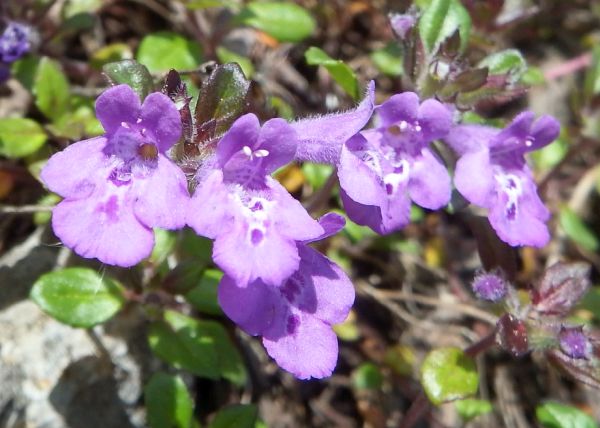
This is a wildflower of late spring and summer, and it can usually be seen in bloom from June to the end of August, depending on altitude.
Uses
The young leaves of Alpine Calamint are used to make a calamint tea and to flavour many other kinds of foods, drinks and syrups; they are also gathered for use in potpourri. These attractive low-growing flowers are popular for use in ornamental rock gardens.
Etymology
Clinopodium, the genus name, comes from Greek and means 'little bed foot' - a reference to the shape of the calyx of the flowers.
As you would expect, the specific epithet alpinum refers to the alpine habitats favoured by this plant.
Similar Species
Red Dead-nettle Lamium purpureum is a plant of rich lowland soils; its flowers are usually paler and more pinkish than those of Rock Thyme.
The Rock Thyme or Alpine Calamint plants shown on this page were photographed in Slovenia during June.

Sue Parker's latest ebook is a revised and enlarged edition of Wild Orchids in The Burren. Full details here...
Buy it for just £5.95 on Amazon...

Please Help Us: If you have found this information interesting and useful, please consider helping to keep First Nature online by making a small donation towards the web hosting and internet costs.
Any donations over and above the essential running costs will help support the conservation work of Plantlife, the Rivers Trust and charitable botanic gardens - as do author royalties and publisher proceeds from books by Pat and Sue.