Spergularia purpurea - Purple Sand-spurrey
Phylum: Magnoliophyta - Class: Equisetopsida - Order: Caryophyllales - Family: Caryophyllaceae
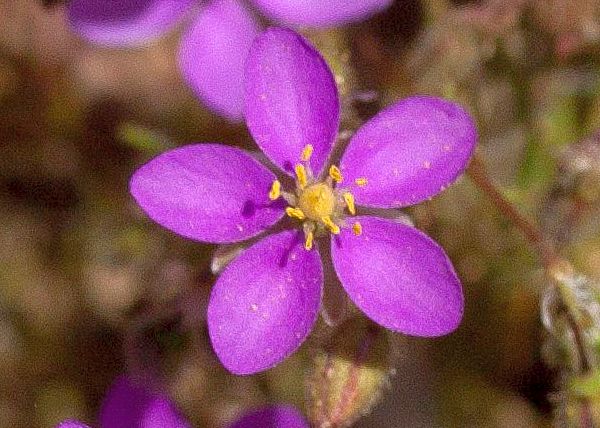
Where Purple Sand-spurrey (sometimes referred to a Purple Sandspurrey) occurs, it usually grows in profusion.
Description
Purple Sand-spurrey is an annual/perennial plant with fleshy strap-like leaves. The purple flowers, each with up to ten stamens, are 3 to 5mm across and have five petals that are backed by slightly shorter sepals. Plants up to 20cm tall can be found in some sheltered locations, but more often Purple Sand-spurrey is a low-growing sprawling plant less than 10cm in height that covers rocks and cliff-top footpath margins.
Habitat
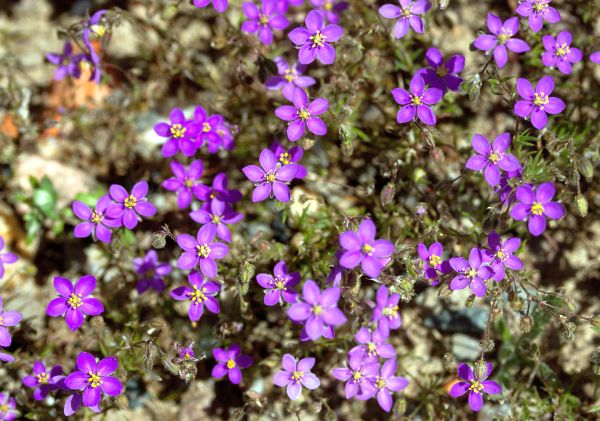
The various Sea-spurreys and Sand-spurreys prefer dry soils and plenty of sunshine. In Britain, Purple Sand-spurrey Spergularia purpurea is found on the coast. As its common name suggests, this low-growing wildflower favours sandy soil. Narrow, silvery-green leaves are borne opposite along the repeatedly-branching woody stems.
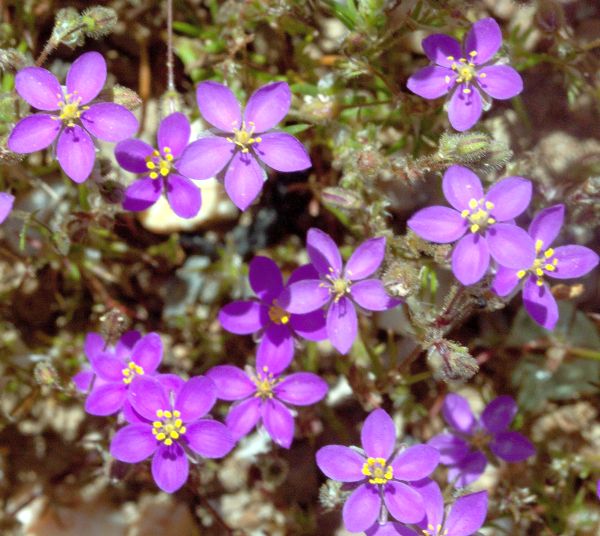
Above: Purple Sand-spurrey in Portugal's Algarve Region
Distribution
The native range of this colourful wildflower is mainly the Iberian Peninnsula (Spain and Portugal) and Morocco in North Africa. Elsewhere it is an introduced species. If you walk anywhere along coastal paths in southern Britain or Ireland, look out for these pretty but far-from-common summer flowers which are introduced aliens.
Above: Purple Sand-spurrey in the Algarve, Portugal.

Sue Parker's latest ebook is a revised and enlarged edition of Wild Orchids in The Burren. Full details here...
Buy it for just £5.95 on Amazon...

Please Help Us: If you have found this information interesting and useful, please consider helping to keep First Nature online by making a small donation towards the web hosting and internet costs.
Any donations over and above the essential running costs will help support the conservation work of Plantlife, the Rivers Trust and charitable botanic gardens - as do author royalties and publisher proceeds from books by Pat and Sue.