The Kingdom of Fungi (Mushrooms, Toadstools etc)

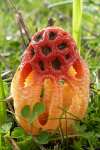
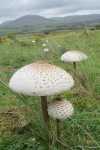
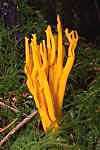
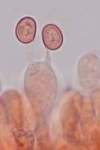
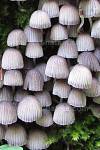
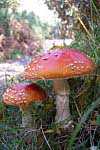
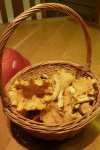
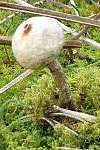
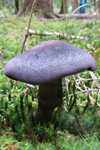
Red Cage Fungus - Clathrus ruberParasols - Macrolepiota proceraYellow Stagshorn - Calocera viscosaFairy Inkcap - Coprinellus disseminatusChanterelle - Cantharellus cibariusFly Agaric - Amanita muscariaViolet Webcap - Cortinarius violaceus

Index of Species arranged alphabetically by Common Names

A to Z by
Scientific Names
A to Z by
Common Names
A to Z by
Mycological Families
Colour (mass)
Spores - approx
Inonotus radiatus Alder Bracket Hymenochaetaceae 02
Pholiota alnicola Alder Scalycap Strophariaceae 09
Laccaria amethystina Amethyst Deceiver Hydnangiaceae 01
Mycena arcangeliana Angel's Bonnet Tricholomataceae 01
Lentinellus cochleatus Aniseed Cockleshell Auriscalpiaceae 01
Clitocybe odorata Aniseed Funnel Tricholomataceae 01
Clavulinopsis luteoalba Apricot Club Clavariaceae 01
Geastrum fornicatum Arched Earthstar Geastraceae 10
Ganoderma applanatum Artist's Bracket Ganodermataceae 09
Tricholoma virgatum Ashen Knight Tricholomataceae 01
Boletus badius Bay Bolete Boletaceae 07
Amanita ovoidea Bearded Amanita Amanitaceae 01
Lactarius pubescens Bearded Milkcap Russulaceae 02
Hericium erinaceus Bearded Tooth Hericiaceae 01
Neobulgaria pura Beech Jellydisc Helotiaceae (Asc) 01
Lactarius blennius Beech Milkcap Russulaceae 02
Russula nobilis Beechwood Sickener Russulaceae 01
Fistulina hepatica Beefsteak Fungus Fistulinaceae 05
Clavulinopsis umbrinella Beige Coral Clavariaceae 01
Laccaria bicolor Bicoloured Deceiver Hydnangiaceae 01
Entoloma bloxamii Big Blue Pinkgill Entolomataceae 05
Leccinum scabrum Birch Bolete Boletaceae 07
Tricholoma fulvum Birch Knight Tricholomataceae 01
Lenzites betulinus Birch Mazegill Polyporaceae 01
Piptoporus betulinus Birch Polypore Fomitopsidaceae 01
Russula grata Bitter Almond Brittlegilll Russulaceae 02
Boletus calopus Bitter Beech Bolete Boletaceae 09
Tylopilus felleus Bitter Bolete Boletaceae 06
Postia stiptica Bitter Bracket Fomitopsidaceae 01
Hebeloma sinapizans Bitter Poisonpie Strophariaceae 09
Sarcodon scabrosus Bitter Tooth Bankeraceae 09
Morchella elata Black Morel Morchellaceae (Asc) 02
Phellodon niger Black Tooth Bankeraceae 01
Boletus pulverolentus Blackening Bolete Boletaceae 07
Russula nigricans Blackening Brittlegill Russulaceae 01
Hygrocybe conica Blackening Waxcap Hygrophoraceae 01
Cortinarius sanguineus Bloodred Webcap Cortinariaceae 08
Russula sanguinaria Bloody Brittlegill Russulaceae 02
Russula chloroides Blue Band Brittlegill Russulaceae 02
Entoloma serrulatum Blue Edge Pinkgill Entolomataceae 05
Stropharia caerulea Blue Roundhead Strophariaceae 11
Tricholoma columbetta Blue Spot Knight Tricholomataceae 01
Cortinarius collinitus Blue-girdled Webcap Cortinariaceae 08
Amanita rubescens Blusher (The) Amanitaceae 01
Daedaleopsis confragosa Blushing Bracket Fomitopsidaceae 01
Agaricus silvaticus Blushing Wood Mushroom Agaricaceae 10
Mitrula paludosa Bog Beacon Helotiaceae (Asc) 01
Galerina paludosa Bog Bell Strophariaceae 09
Spinellus fusiger Bonnet Mould Mucoraceae (Zyg) 01
Tricholoma focale Booted Knight Tricholomataceae 01
Suillus bovinus Bovine Bolete Suillaceae 03
Pleurotus cornucopiae Branching Oyster Pleurotaceae 02
Hypholoma lateritium Brick Tuft Strophariaceae 11
Amanita regalis Brown Fly Agaric Amanitaceae 01
Panaeolina foenisecii Brown Mottlegill Bolbitiaceae 10
Paxillus involutus Brown Rollrim Paxillaceae 03
Armillaria gallica Bulbous Honey Fungus Physalacriaceae 01
Mycena haematopus Burgundydrop Bonnet Tricholomataceae 01
Rhodocollybia butyracea Butter Cap Marasmiaceae 02
Hygrocybe ceracea Butter Waxcap Hygrophoraceae 01
Amanita caesarea Caesar's Mushroom Amanitaceae 01
Xylaria hypoxylon Candlesnuff Fungus Xylariaceae (Asc) 12
Geopora sumneriana Cedar Cup Pyrenomataceae (Asc) 01
Boletus edulis Cep or Penny Bun Boletaceae 07
Cantharellus cibarius Chanterelle Cantharellaceae 01
Russula cyanoxantha Charcoal Burner Russulaceae 01
Laetiporus sulphureus Chicken of the Woods Polyporaceae 01
Cortinarius cinnamomeus Cinnamon Webcap Cortinariaceae 08
Clitocybe nebularis Clouded Funnel Tricholomataceae 01
Mycena inclinata Clustered Bonnet Tricholomataceae 01
Psathyrella multipedata Clustered Brittlestem Psathyrellaceae 12
Lyophyllum decastes Clustered Domecap Lyophyllaceae 01
Gymnopus confluens Clustered Toughshank Marasmiaceae 01
Lactarius glyciosmus Coconut Milkcap Russulaceae 02
Geastrum triplex Collared Earthstar Geastraceae 10
Marasmius rotula Collared Parachute Marasmiaceae 01
Agaricus bisporus Commercial Button Mushroom Agaricaceae 10
Crucibulum laeve Common Bird's Nest Agaricaceae 02
Mycena galericulata Common Bonnet Tricholomataceae 01
Melanoleuca polioleuca Common Cavalier Tricholomataceae 02
Scleroderma citrinum Common Earthball Sclerodermataceae 10
Clitocybe gibba Common Funnel Tricholomataceae 01
Coprinopsis atramentaria Common Inkcap Psathyrellaceae 12
Dacrymyces stillatus Common Jellyspot Dacrymycetaceae 01
Lycoperdon perlatum Common Puffball Agaricaceae 10
Gymnopilus penetrans Common Rustgill Strophariaceae 08
Psathyrella piluliformis Common Stump Brittlestem Psathyrellaceae 12
Parasola conopilus Conical Brittlestem Psathyrellaceae 12
Parasola conopilus Conical Brittlestem Psathyrellaceae 10
Postia caesia Conifer Blueing Bracket Fomitopsidaceae 01
Stropharia hornemannii Conifer Roundhead Strophariaceae 11
Hypholoma capnoides Conifer Tuft Strophariaceae 11
Nectria cinnabarina Coral Spot Nectriaceae (Asc) 12
Russula xerampelina Crab Brittlegill Russulaceae 02
Entoloma sericellum Cream Pinkgill Entolomataceae 05
Clavulina coralloides Crested Coral Clavulinaceae 01
Hygrocybe punicea Crimson Waxcap Hygrophoraceae 01
Russula densifolia Crowded Brittlegill Russulaceae 01
Bulgaria inquinans Crown Anemone Bulgariaceae (Asc) 01
Macrocystidia cucumis Cucumber Cap Marasmiaceae 06
Lactarius camphoratus Curry Milkcap Russulaceae 02
Geastrum floriforme Daisy Earthstar Geastraceae 10
Cortinarius bolaris Dappled Webcap Cortinariaceae 08
Agrocybe erebia Dark Fieldcap Strophariaceae 10
Armillaria ostoyae Dark Honey Fungus Physalacriaceae 01
Hygrocybe spadicea Date Waxcap Hygrophoraceae 01
Russula aurora Dawn Brittlegill Russulaceae 01
Xylaria polymorpha Dead Man's Fingers Xylariaceae (Asc) 12
Cortinarius rubellus Deadly Webcap Cortinariaceae 08
Amanita phalloides Deathcap Amanitaceae 01
Laccaria laccata Deceiver Hydnangiaceae 01
Tricholoma sejunctum Deceiving Knight Tricholomataceae 01
Pluteus cervinus Deer Shield Pluteaceae 05
Amanita virosa Destroying Angel Amanitaceae 01
Boletus satanas Devil's Bolete Boletaceae 07
Clathrus archeri Devil's Fingers Phallaceae 07
Hydnellum peckii Devil's Tooth Bankeraceae 09
Mutinus caninus Dog Stinkhorn Phallaceae 02
Polyporus squamosus Dryad's Saddle Polyporaceae 01
Psathyrella ammophila Dune Brittlestem Psathyrellaceae 10
Peziza ammophila Dune Cup Pezizaceae (Asc) 01
Agaricus bernardii Dune Mushroom Agaricaceae 10
Hygrocybe conicoides Dune Waxcap Hygrophoraceae 01
Stropharia semiglobata Dung Roundhead Strophariaceae 11
Porphyrellus porphyrosporus Dusky Bolete Boletaceae 11
Lycoperdon nigrescens Dusky Puffball Agaricaceae 10
Geastrum schmidelii Dwarf Earthstar Geastraceae 10
Pisolithus arrhizus Dyeball Sclerodermataceae 09
Phaeolus schweinitzii Dyer's Mazegill Polyporaceae 02
Auriscalpium vulgare Earpick Fungus Auriscalpiaceae 01
Thelephora terrestris Earthfan Thelephoraceae 11
Cystoderma amianthinum Earthy Powdercap Tricholomataceae 02
Panaeolus semiovatus Egghead Mottlegill Bolbitiaceae 12
Helvella elastica Elastic Saddle Helvellaceae (Asc) 01
Helvella lacunosa Elfin Saddle Helvellaceae (Asc) 01
Claviceps purpurea Ergot Clavicipitaceae (Asc) 02
Coprinellus disseminatus Fairy Inkcap Psathyrellaceae 12
Marasmius oreades Fairy Ring Champignon Marasmiaceae 01
Hygrophoropsis aurantiaca False Chanterelle Hygrophoropsidaceae 01
Amanita citrina False Deathcap Amanitaceae 01
Gyromitra esculenta False Morel Morchellaceae (Asc) 02
Lactarius deterrimus False Saffron Milkcap Russulaceae 04
Entoloma griseocyaneum Felted Pinkgill Entolomataceae 05
Cyathus olla Field Bird's Nest Agaricaceae 02
Lepista saeva Field Blewit Tricholomataceae 05
Agaricus campestris Field Mushroom Agaricaceae 10
Pholiota flammans Flaming Scalycap Strophariaceae 09
Lactarius vellereus Fleecy Milkcap Russulaceae 01
Lepista irina Flowery Blewit Tricholomataceae 02
Cyathus striatus Fluted Bird's Nest Agaricaceae 02
Amanita muscaria Fly Agaric Amanitaceae 01
Cortinarius orellanus Fool's Webcap Cortinariaceae 08
Russula fragilis Fragile Brittlegill Russulaceae 01
Clitocybe phyllophila Frosty Funnel Tricholomataceae 01
Cortinarius hemitrichus Frosty Webcap Cortinariaceae 08
Russula queletii Fruity Brittlegill Russulaceae 01
Galerina marginata Funeral Bell Strophariaceae 09
Stropharia coronilla Garland Roundhead Strophariaceae 11
Russula fellea Geranium Brittlegill Russulaceae 02
Clavariadelphus pistillaris Giant Club Gomphaceae 01
Meripilus giganteus Giant Polypore Meripilaceae 01
Calvatia gigantea Giant Puffball Agaricaceae 07
Russula aurea Gilded Brittlegill Russulaceae 03
Tricholoma cingulatum Girdled Knight Tricholomataceae 01
Cortinarius trivialis Girdled Webcap Cortinariaceae 08
Coprinellus micaceus Glistening Inkcap Psathyrellaceae 12
Hygrocybe glutinipes Glutinous Waxcap Hygrophoraceae 01
Pseudoclitocybe cyathiformis Goblet Tricholomataceae 01
Hygrocybe cantharellus Goblet Waxcap Hygrophoraceae 01
Phaeolepiota aurea Golden Bootleg Agaricaceae 03
Cantharellus aurora Golden Chanterelle Cantharellaceae 01
Pholiota aurivella Golden Scalycap Strophariaceae 09
Clavulinopsis fusiformis Golden Spindles Clavariaceae 01
Hygrocybe chlorophana Golden Waxcap Hygrophoraceae 01
Cortinarius praestans Goliath Webcap Cortinariaceae 08
Russula aeruginea Green Brittlegill Russulaceae 02
Chlorociboria aeruginascens Green Elfcup Helotiaceae (Asc) 01
Russula virescens Greencracked Brittlegill Russulaceae 02
Clavulina cinerea Grey Coral Clavulinaceae 01
Tricholoma terreum Grey Knight Tricholomataceae 01
Lactarius vietus Grey Milkcap Russulaceae 02
Amanita excelsa Grey Spotted Amanita Amanitaceae 01
Amanita vaginata Grisette Amanitaceae 01
Mycena polygramma Grooved Bonnet Tricholomataceae 01
Cortinarius caperatus Gypsy (The) Cortinariaceae 08
Stereum hirsutum Hairy Curtain Crust Stereaceae 01
Clavulinopsis laeticolor Handsome Club Clavariaceae 01
Otidea onotica Hare's Ear Pyronemataceae (Asc) 01
Coprinopsis lagopus Hare'sfoot Inkcap Psathyrellaceae 12
Hygrocybe laeta Heath Waxcap Hygrophoraceae 01
Grifola frondosa Hen of the Woods Meripilaceae 01
Hygrophorus hypothejus Herald of Winter Tricholomataceae 01
Armillaria mellea Honey Fungus Physalacriaceae 01
Hygrocybe reidii Honey Waxcap Hygrophoraceae 01
Fomes fomentarius Hoof Fungus Polyporaceae 02
Craterellus cornucopioides Horn of Plenty Cantharellaceae 01
Agaricus arvensis Horse Mushroom Agaricaceae 10
Gymnopus androsaceus Horsehair Parachute Marasmiaceae 01
Entoloma chalybaeum Indigo Pinkgill Entolomataceae 05
Boletus impolitus Iodine Bolete Boletaceae 07
Hygrophorus eburneus Ivory Woodwax Tricholomataceae 01
Auricularia auricula-judae Jelly Ear Auriculariaceae 01
Pseudohydnum gelatinosum Jelly Tooth Insertae sedis 01
Leotia lubrica Jellybaby Leotiaceae (Asc) 01
Amanita gemmata Jewelled Amanita Amanitaceae 01
Daldinia concentrica King Alfred's Cakes Xylariaceae (Asc) 01
Ganoderma lucidum Lacquered Bracket Ganodermataceae 09
Suillus grevillei Larch Bolete Suillaceae 03
Bisporella citrina Lemon Disco Helotiaceae (Asc) 01
Mycena pura Lilac Bonnet Tricholomataceae 01
Inocybe geophylla var. lilacina Lilac Fibrecap Inocybaceae 09
Entoloma porphyrophaeum Lilac Pinkgill Entolomataceae 05
Pluteus leoninus Lion Shield Pluteaceae 05
Hericium americanum Lion's Mane Hericiaceae 01
Loreleia marchantiae Liverwort Navel Insertae sedis 01
Entoloma sinuatum Livid Pinkgill Entolomataceae 05
Trametes gibbosa Lumpy Bracket Polyporaceae 01
Boletus luridus Lurid Bolete Boletaceae 07
Psilocybe semilanceata Magic Mushroom Strophariaceae 11
Coprinopsis picacea Magpie Inkcap Psathyrellaceae 12
Boletus pruinatus Matte Bolete Boletaceae 07
Clavulinopsis corniculata Meadow Coral Clavariaceae 01
Lycoperdon pratense Meadow Puffball Agaricaceae 10
Hygrocybe pratensis Meadow Waxcap Hygrophoraceae 01
Cortinarius caerulescens Mealy Bigfoot Webcap Cortinariaceae 08
Entoloma prunuloides Mealy Pinkgill Entolomataceae 05
Lactarius subdulcis Mild Milkcap Russulaceae 04
Russula delica Milk White Brittlegill Russulaceae 01
Conocybe apala Milky conecap Bolbitiaceae 08
Clitopilus prunulus Miller (The) Entolomataceae 05
Morchella esculenta Morel Morchellaceae (Asc) 02
Poronia punctata Nail Fungus Xylariaceae (Asc) 02
Psdeudoinonotus dryadeus Oak Bracket Hymenochaetaceae 01
Daedalea quercina Oak Mazegill Fomitopsidaceae 01
Lactarius quietus Oakbug Milkcap Russulaceae 04
Russula ochroleuca Ochre Brittlegill Russulaceae 02
Hygrocybe quieta Oily Waxcap Hygrophoraceae 01
Strobilomyces strobilaceus Old Man of the Woods Boletaceae 12
Microglossum olivaceum Olive Earthtongue Leotiaceae (Asc) 01
Leccinum versipelle Orange Birch Bolete Boletaceae 03
Mycena acicula Orange Bonnet Tricholomataceae 01
Amanita crocea Orange Grisette Amanitaceae 01
Lactarius aurantiacus Orange Milkcap Russulaceae 02
Aleuria aurantia Orange Peel Fungus Pyronemataceae (Asc) 01
Hygrocybe aurantiosplendens Orange Waxcap Hygrophoraceae 01
Cortinarius mucosus Orange Webcap Cortinariaceae 08
Pleurotus ostreatus Oyster Mushroom Pleurotaceae 02
Psathyrella candolleana Pale Brittlestem Psathyrellaceae 12
Lactarius pallidus Pale Milkcap Russulaceae 03
Calocera pallidospathulata Pale Stagshorn Dacrymycetaceae 01
Amanita pantherina Panthercap Amanitaceae 01
Entoloma papillatum Papillate Pinkgill Entolomataceae 05
Pseudoboletus parasiticus Parasitic Bolete Physalacriaceae 07
Macrolepiota procera Parasol Agaricaceae 01
Hygrocybe psittacina Parrot Waxcap Hygrophoraceae 01
Agaricus bitorquis Pavement Mushroom Agaricaceae 10
Cortinarius alboviolaceus Pearly Webcap Cortinariaceae 08
Crepidotus mollis Peeling Oysterling Inocybaceae 03
Cortinarius flexipes Pelargonium Webcap Cortinariaceae 08
Chalciporus piperatus Peppery Bolete Boletaceae 01
Lactarius piperatus Peppery Milkcap Russulaceae 01
Tuber melanosporum Perigord Truffle Tuberaceae (Asc) 02
Hygrocybe acutoconica Persistent Waxcap Hygrophoraceae 01
Lycoperdon excipuliforme Pestle Puffball Agaricaceae 11
Panaeolus papilionaceus Petticoat Mottlegill Bolbitiaceae 12
Hygrocybe calyptriformis Pink Waxcap Hygrophoraceae 01
Leucocoprinus birnbaumii Plant Pot Dapperling Agaricaceae 01
Parasola plicatilis Pleated Inkcap Psathyrellaceae 12
Tricholomopsis rutilans Plums and Custard Tricholomataceae 01
Hebeloma crustuliniforme Poisonpie Strophariaceae 09
Agrocybe cylindracea Poplar Fieldcap Strophariaceae 10
Oudemansiella mucida Porcelain Fungus Marasmiaceae 01
Squamanita paradoxa Powdercap Strangler Tricholomataceae 01
Russula parazurea Powdery Brittlegill Russulaceae 02
Asterophora lycoperdiodes Powdery Piggyback Lyophyllaceae 02
Russula sardonia Primrose Brittlegill Russulaceae 02
Agaricus augustus Prince (The) Agaricaceae 10
Tricholomopsis decora Prunes and Custard Tricholomataceae 01
Russula atropurpurea Purple Brittlegill Russulaceae 03
Ascocoryne sarcoides Purple Jellydisc Helotiaceae (Asc) 01
Cortinarius stillatitius Purple Stocking Webcap Cortinariaceae 08
Cortinarius armillatus Red Banded Webcap Cortinariaceae 08
Clathrus ruber Red Cage Phallaceae 07
Boletus chrysenteron Red Cracking Bolete Boletaceae 07
Fomitopsis pinicola Red-banded Bracket Fomitopsidaceae 02
Leratiomyces ceres Redlead Roundhead Strophariaceae 11
Hydnellum scrobiculatum Ridged Tooth Bankeraceae 09
Armillaria tabescens Ringless Honey Fungus Physalacriaceae 01
Heterobasidion annosum Root Rot Bondarzewiaceae 02
Boletus radicans Rooting Bolete Boletaceae 07
Xerula radicata Rooting Shank Physalacriaceae 02
Ramaria botrytis Rosso Coral Gomphaceae 02
Mycena rosea Rosy Bonnet Tricholomataceae 01
Russula rosea Rosy Brittlegill Russulaceae 02
Gomphidius roseus Rosy Spike Gomphidiaceae 11
Boletus regius Royal Bolete Boletaceae 07
Boletus rubellus Ruby Bolete Boletaceae 07
Sarcoscypha coccinea Ruby Elfcup Sarcoscyphaceae (Asc) 01
Lactarius rufus Rufous Milkcap Russulaceae 04
Gymnopus dryophila Russet Toughshank Marasmiaceae 01
Leccinum crocipodium Saffron Bolete Boletaceae 03
Lactarius deliciosus Saffron Milkcap Russulaceae 04
Phallus hadriani Sand Stinkhorn Phallaceae 02
Battarrea phalloides Sandy Stiltball Agaricaceae 08
Gymnopilus sapineus Scaly Rustgill Strophariaceae 08
Sarcodon squamosus Scaly Tooth Bankeraceae 09
Cordyceps militaris Scarlet Catterpillarclub Clavicipitaceae (Asc) 02
Sarcoscypha austriaca Scarlet Elfcup Sarcoscyphaceae (Asc) 01
Hygrocybe coccinea Scarlet Waxcap Hygrophoraceae 01
Boletus luridiformis Scarletina Bolete Boletaceae 07
Laccaria proxima Scurfy Deceiver Hydnangiaceae 01
Boletus porosporus Sepia Bolete Boletaceae 07
Geastrum fimbriatum Sessile Earthstar Geastraceae 10
Inonotus hispidus Shaggy Bracket Hymenochaetaceae 01
Coprinus comatus Shaggy Inkcap Agaricaceae 12
Chlorophyllum rhacodes Shaggy Parasol Agaricaceae 01
Pholiota squarrosa Shaggy Scalycap Strophariaceae 09
Kuehneromyces mutabilis Sheathed Woodtuft Strophariaceae 08
Albatrellus ovinus Sheep Polypore Albatrellaceae 01
Lepiota clypeolaria Shield Dapperling Agaricaceae 01
Entoloma clypeatum Shield Pinkgill Entolomataceae 05
Russula emetica Sickener Russulaceae 02
Asterophora parasitica Silky Piggyback Lyophyllaceae 01
Entoloma sericeum Silky Pinkgill Entolomataceae 05
Volvariella bombycina Silky Rosegill Pluteaceae 05
Macrolepiota mastoidea Slender Parasol Agaricaceae 01
Gomphidius glutinosus Slimy Spike Gomphidiaceae 10
Hygrocybe irrigata Slimy Waxcap Hygrophoraceae 01
Suillus luteus Slippery Jack Suillaceae 03
Calocera cornea Small Stagshorn Dacrymycetaceae 01
Bjerkandera adusta Smoky Bracket Meruliaceae 01
Hypholoma marginatum Snakeskin Brownie Strophariaceae 11
Amanita ceciliae Snakeskin Grisette Amanitaceae 01
Coprinopsis nivea Snowy Inkcap Psathyrellaceae 12
Hygrocybe virginea Snowy Waxcap Hygrophoraceae 01
Tricholoma saponaceum Soapy Knight Tricholomataceae 01
Amanita echinocephala Solitary Amanita Amanitaceae 01
Ganoderma australe Southern Bracket Ganodermataceae 09
Gymnopilus junonius Spectacular Rustgill Strophariaceae 08
Gymnopus fusipes Spindleshank Marasmiaceae 01
Lycoperdon echinatum Spiny Puffball Agaricaceae 11
Hygrocybe splendidissima Splendid Waxcap Hygrophoraceae 01
Inocybe rimosa Split Fibrecap Inocybaceae 09
Schizophyllum commune Split Gill Schizophyllaceae 01
Rhodocollybia maculata Spotted Toughshank Marasmiaceae 02
Agrocybe praecox Spring Fieldcap Strophariaceae 09
Calocybe gambosa St George's Mushroom Tricholomataceae 01
Entoloma conferendum Star Pinkgill Entolomataceae 05
Pholiota gummosa Sticky Scalycap Strophariaceae 09
Phallus impudicus Stinkhorn Phallaceae 02
Russula foetens Stinking Brittlegill Russulaceae 02
Lepiota cristata Stinking Dapperling Agaricaceae 01
Volvariela gloiocephala Stubble Rosegill Pluteaceae 05
Lycoperdon pyriforme Stump Puffball Agaricaceae 10
Boletus subtomentosus Suede Bolete Boletaceae 07
Tricholoma sulphureum Sulphur Knight Tricholomataceae 01
Hypholoma fasciculare Sulphur Tuft Strophariaceae 11
Boletus reticulatus Summer Bolete Boletaceae 07
Tuber aestivum Summer Truffle Tuberaceae (Asc) 02
Cortinarius semisanguineus Surprise Webcap Cortinariaceae 08
Rhytisma acerinum Sycamore Tarspot Rhytismataceae (Asc) 01
Lepista flaccida Tawny Funnel Tricholomataceae 02
Amanita fulva Tawny Grisette Amanitaceae 01
Hydnum rufescens Terracotta Hedgehog Hydnaceae 01
Russula vesca The Flirt Russulaceae 01
Hericium cirrhatum Tiered Tooth Hericiaceae 01
Coltricia perennis Tiger's Eye Hymenochaetaceae 09
Otidea bufonia Toad's Ear Pyronemataceae (Asc) 01
Basidioradulum radula Toothed Crust Schizoporaceae 01
Tarzetta cupularis Toothed Cup Pyronemataceae (Asc) 01
Clitocybe geotropa Trooping Funnel Tricholomataceae 01
Cantharellus tubaeformis Trumpet Chanterelle Cantharellaceae 01
Polyporus tuberaster Tuberous Polypore Polyporaceae 01
Panaeolus fimicola Turf Mottlegill Bolbitiaceae 12
Trametes versicolor Turkeytail Polyporaceae 01
Marasmiellus ramealis Twig Parachute Marasmiaceae 01
Laccaria tortilis Twisted Deceiver Hydnangiaceae 01
Lactarius turpis Ugly Milkcap Russulaceae 04
Ramaria stricta Upright Coral Gomphaceae 03
Crepidotus variabilis Variable Oysterling Inocybaceae 03
Cortinarius anomalus Variable Webcap Cortinariaceae 08
Suillus variegatus Variegated Bolete Suillaceae 03
Pleurotus dryinus Veiled Oyster Pleurotaceae 02
Hebeloma mesophaeum Veiled Poisonpie Strophariaceae 09
Tapinella atrotomentosa Velvet Rollrim Tapinellaceae 09
Flammulina velutipes Velvet Shank Physalacriaceae 01
Pluteus umbrosus Velvet Shield Pluteaceae 05
Hygrocybe miniata Vermillion Waxcap Hygrophoraceae 01
Cortinarius violaceus Violet Webcap Cortinariaceae 08
Amanita strobiliformis Warted Amanita Amanitaceae 01
Suillus granulatus Weeping Bolete Suillaceae 03
Lacrymaria lacrymabunda Weeping Widow Psathyrellaceae 12
Exidia thuretiana White Brain Auriculariaceae 01
Leucoagaricus leucothites White Dapperling Agaricaceae 01
Lyophyllum connatum White Domecap Lyophyllaceae 01
Inocybe geophylla White Fibrecap Inocybaceae 09
Tricholoma album White Knight Tricholomataceae 01
Helvella crispa White Saddle Helvellaceae (Asc) 01
Clavaria fragilis White Spindles Clavariaceae 01
Tuber magnatum White Truffle Tuberaceae (Asc) 02
Megacollybia platyphylla Whitelaced Shank Tricholomataceae 01
Phellinus igniarius Willow Bracket Hymenochaetaceae 02
Pluteus salicinus Willow Shield Pluteaceae 05
Polyporus brumalis Winter Polypore Polyporaceae 01
Tulostoma brumale Winter Stalkball Agaricaceae 06
Exidia glandulosa Witches' Butter Auriculariaceae 01
Lepista nuda Wood Blewit Tricholomataceae 05
Sparassis crispa Wood Cauliflower Polyporaceae 01
Hydnum repandum Wood Hedgehog Hydnaceae 01
Agaricus silvicola Wood Mushroom Agaricaceae 10
Entoloma rhodopolium Wood Pinkgill Entolomataceae 05
Gymnopus peronatus Wood Woollyfoot Marasmiaceae 01
Lactarius torminosus Woolly Milkcap Russulaceae 02
Clavulina rugosa Wrinkled Club Clavulinaceae 01
Lactarius repraesentaneus Yellow Bearded Milkcap Russulaceae 02
Tremella mesenterica Yellow Brain Tremellaceae 01
Rhizopogon luteolus Yellow False Truffle Rhizopogonaceae 02
Bolbitius titubans Yellow Fieldcap Bolbitiaceae 08
Tricholoma equestre Yellow Knight Tricholomataceae 01
Pluteus chrysophaeus Yellow Shield Pluteaceae 05
Calocera viscosa Yellow Stagshorn Dacrymycetaceae 01
Agaricus xanthodermus Yellow Stainer Agaricaceae 10
Russula claroflava Yellow Swamp Brittlegill Russulaceae 03
Lactarius chrysorrheus Yellowdrop Milkcap Russulaceae 04
Stereum subtomentosum Yellowing Curtain Crust Stereaceae 01
Mycena epipterygia Yellowleg Bonnet Tricholomataceae 01
Agaricus devoniensis Z - No Common Name Agaricaceae 10
Agaricus impudicus Z - No Common Name Agaricaceae 10
Agrocybe rivulosa Z - No Common Name Strophariaceae 09
Albatrellus subrufescens Z - No Common Name Albatrellaceae 01
Amanita submembranacea Z - No Common Name Amanitaceae 01
Boletus aereus Z - No Common Name Boletaceae 07
Boletus cisalpinus Z - No Common Name Boletaceae 07
Boletus fechtneri Z - No Common Name Boletaceae 07
Boletus truncatus Z - No Common Name Boletaceae 07
Cheilymenia granulata Z - No Common Name Pyrenomataceae (Asc) 01
Chlorociboria aeruginosa Z - No Common Name Helotiaceae (Asc) 01
Chroogomphus rutilus Z - No Common Name Gomphidiaceae 12
Conocybe tenera Z - No Common Name Bolbitiaceae 08
Coprinellus impatiens Z - No Common Name Psathyrellaceae 12
Coprinellus xanthothrix Z - No Common Name Psathyrellaceae 12
Crepidotus calolepsis Z - No Common Name Inocybaceae 03
Crepidotus epibryus Z - No Common Name Inocybaceae 03
Dacrymyces chrysospermus Z - No Common Name Dacrymycetaceae 01
Dichomitus campestris Z - No Common Name Polyporaceae 02
Echinoderma echinaceum Z - No Common Name Agaricaceae 02
Entoloma mougeotii Z - No Common Name Entolomataceae 05
Entoloma nitidum Z - No Common Name Entolomataceae 05
Entoloma saepium Z - No Common Name Entolomataceae 05
Entoloma vernum Z - No Common Name Entolomataceae 05
Exidia plana Z - No Common Name Auriculariaceae 01
Exidia recisa Z - No Common Name Auriculariaceae 01
Galerina graminea Z - No Common Name Strophariaceae 09
Galerina pumila Z - No Common Name Strophariaceae 09
Ganoderma resinaceum Z - No Common Name Ganodermataceae 09
Geoglossum cookeanum Z - No Common Name Geoglossaceae 01
Geopora arenicola Z - No Common Name Pyrenomataceae (Asc) 01
Grifola umbellata Z - No Common Name Meripilaceae 01
Gymnopilus decipiens Z - No Common Name Strophariaceae 08
Gymnosporangium clavariiforme Z - No Common Name Pucciniaceae 01
Helvella atra Z - No Common Name Helvellaceae (Asc) 01
Hygrocybe helobia Z - No Common Name Hygrophoraceae 01
Inocybe sindonia Z - No Common Name Inocybaceae 09
Lactarius uvidus Z - No Common Name Russulaceae 02
Lepiota felina Z - No Common Name Agaricaceae 01
Lepiota ignivolvata Z - No Common Name Agaricaceae 01
Lepista multiformis Z - No Common Name Tricholomataceae 05
Lepista sordida Z - No Common Name Tricholomataceae 01
Lycoperdon mammiforme Z - No Common Name Agaricaceae 10
Macrolepiota excoriata Z - No Common Name Agaricaceae 01
Panus rudis Z - No Common Name Polyporaceae 01
Parasola auricoma Z - No Common Name Psathyrellaceae 12
Parasola leiocephala Z - No Common Name Psathyrellaceae 12
Peziza micropus Z - No Common Name Pezizaceae (Asc) 01
Pycnoporus cinnabarinus Z - No Common Name Polyporaceae 01
Ramaria abietina Z - No Common Name Gomphaceae 02
Ramaria flaccida Z - No Common Name Gomphaceae 02
Ramaria formosa Z - No Common Name Gomphaceae 03
Russula farinipes Z - No Common Name Russulaceae 01
Russula illota Z - No Common Name Russulaceae 02
Russula laricina Z - No Common Name Russulaceae 02
Russula paludosa Z - No Common Name Russulaceae 02
Steccherinum ochraceum Z - No Common Name Stecherinaceae 01
Stereum rameale Z - No Common Name Stereaceae 01
Suillus collinitus Z - No Common Name Suillaceae 03
Suillus placidus Z - No Common Name Suillaceae 03
Tarzetta catinus Z - No Common Name Pyronemataceae (Asc) 01
Thelephora penicillata Z - No Common Name Thelephoraceae 11
Trametes pubescens Z - No Common Name Polyporaceae 01
Trametes suaveolens Z - No Common Name Polyporaceae 01
Tricholoma pardinum Z - No Common Name Tricholomataceae 01
Tricholoma portentosum Z - No Common Name Tricholomataceae 01
Tricholoma scoides Z - No Common Name Tricholomataceae 01

Fungi for Food

On the subject of mushrooms that you can eat we stress, both in our Safety Guide and here, that just as some plants and trees are poisonous (don't eat the seeds of Deadly Nightshade or of Laburnum, for example) some fungi are also deadly poisonous. If you plan on gathering mushrooms for food then you really do need to be very careful. Take no risks: if in doubt, do not contemplate eating a mushroom, toadstool or any other form of fungus.

There is no simple way of knowing which fungi are edible and which are poisonous (or even hallucinogenic). Ignore any suggestions that a cap that peels is safe, or that if animals can eat a fungus it must be safe for humans: these and many other myths have cost people their lives.Our advice is this:

  1. Get to know how to identify with certainty a small number of good edible fungi
  2. And even more importantly make sure that you can identify the most deadly of the poisonous ones
  3. Do not experiment; get expert advice if you are in any doubt
  4. Do not trust visual identification alone, whether from books or websites (including this one), as fungi vary tremendously in size, shape, colour and sometimes even in growing habitat
  5. Many edible fungi can cause stomach upsets if they are not thoroughly cooked; only a tiny minority are suitable for eating raw
  6. Just as people react differently to other kinds of food, so some folk can be upset by eating mushroom species that others enjoy without any problems; so always try a very small portion of a new species until you know that it suits you
  7. Remember that fungi tend to concentrate heavy metals such as lead and cadmium, and so eat them only as part of a balanced diet. Relying largely or solely on fungi for food is as unwise as relying solely on slow-growing fish (for example) or any other food sources that accumulate toxins from the environment
  8. Do not gather fungi (or berries for that matter) from polluted land or from beside busy roads where vehicle exhaust toxins can accumulate
  9. First Nature cannot accept responsibility for poisoning if you eat any of the species listed as 'edible' on this website; the absence of any mention of toxicity must not be taken as implying that a species is edible.
  10. That said, a few fungi species are both plentiful (so there is no real conservation concern as long as you take just a few rather than leaving the area bare!) and absolutely delicious. Mushrooms make a wonderful occasional treat.

Avoid mushroom poisoning

  1. Stick to well-known and easily identifiable edible species - see our list of 'favourites' below
  2. Collect only edible species - do not combine general fungi forays with gathering edible fungi
  3. Check all fungi that you gather and discard any species other than known edible ones that you (or an expert guide with you) can identify with certainty
  4. Discard any doubtful specimens
  5. Keep fungi in the fridge until you are ready to cook them

Our Favourite Edible Fungi

We love mushrooms, but for safety's sake we restrict our gathering to species that are both plentiful and easily identified. Some of our real favourites are:

  1. Boletus edulis - Penny Bun Bolete, Cep, or Porcini
  2. Agaricus arvensis - Field Mushroom
  3. Morchella elata and Morchella esculenta - Morels (a great springtime treat)
  4. Cantharellus cibarius - Summer Chanterelle or Girolle
  5. Cantharellus tubaeformis - Autumn Chanterelle or Yellow Legs
  6. Calvatia (Langermannia) gigantea - Common Puffball
  7. Macrolepiota procera - Parasol Mushroom

There are many other good edible fungi including Blewits and Giant Parasols, of course, and you will find edibility details on the species pages in our identification guide.

The Deadly Killers

Here is a shortlist of some of the most deadly species; if you eat them they can kill you unless you get very early professional treatment (sometimes the treatment involves kidney and/or liver transplants!).

  1. Amanita phalloides - Death Cap - probably the cause of more deaths from eating fungi than all other species put together; but that is perhaps because it is such a common species and it can easily be mistaken for a field mushroom or other pale edible species. Get to know this one really well!
  2. Amanita virosa - Destroying Angel. This causes the same problems as the Death Cap but is less common in Britain; it is very common in colder climes such as Scandinavia.
  3. Cortinarius Speciossisimus and Cortinarius orellanus - treat all members of this group as seriously poisonous; some of them are just as deadly as the Death Cap. If a cap-and-stem mushroom leaves rusty brown spore deposits, do not even consider eating it.
  4. Gallerina marginata - another relative of the Cortinarius fungi mentioned above, and just as seriously poisonous.
  5. Amanita muscaria - Fly Agaric - hallucinogenic and possibly lethal to anyone with a heart or respiratory condition or other major illness.
  6. Amanita pantherina - Panther Cap - generally considered more seriously toxic that the Fly Agaric (Amanita muscaria), so definitely not one for the lunch menu!

Most fungi are not poisonous, but those mentioned above are just a few that cause serious and possibly fatal poisoning. Many others can cause tummy upsets - sometimes very unpleasant - while others simply taste bad or are too tough to eat. See also our web pages on Poisonous Fungi, Hallucinogens, and Imposters that masquerade as edibles...

If you do gather some of the fungi that are recommended for eating, a good mushroom cookery book can help you make them into an appetising meal. Authors' names to look out for include Antonio Carlucci, John Wright, and Roger Phillips. Or you might like to try one of our menus from this website...

Other benefits of fungi

We now know that over 95% of plants live in symbiosis with fungi, via what are called mycorrhizal interactions. (The fungi link to and act as extensions of - in some instances actually invading the cells of - the fine rootlets of trees, orchids and most other plants.) The role of fungi as natural recyclers of dead plant and animal material is crucial to the survival of all other forms of life on Planet Earth. Apart from a few bacteria, fungi are the only thing that consumes the tough lignin material contained in dead wood. We also rely on fungi for many of our modern medicines, including antibiotics such as penicillin; and for the yeasts that are essential for the production of wine, beer and most kinds of bread. Some kinds of polypores have been used in dyeing of fabrics and for drying fishermen's artificial flies. The list of uses for fungi seems almost endless. Oh, and finally... in their diversity and beauty they certainly rival flowers!

More details about the Fungi section on First-Nature.com (included mainly for search engines)

In the identification guide section are details of many fungi of the class Basidiomycota - commonly called basidiomycetes - as well as several from the Ascomycota - also referred to as ascomycetes. In the gilled mushroom section you can learn about the Agaricaceae, a family which includes many edible fungi such as Agaricus arvensis, the Horse Mushroom; Agaricus campestris, the Field Mushroom, and several woodland species such as Agaricus silvicola, Agaricus silvaticus, and Agaricus augustus, commonly known as the Prince. Supermarket mushrooms also belong here, and they include Agaricus bisporus, the well-known button mushroom, as well as Portabello Mushrooms and Chestnut Mushrooms, all variations on the same theme. Lepiota or dapperling mushrooms and Macrolepiota or parasol mushrooms, notably Macrolepiota procera, also belong in the Agaricaceae. Macrolepiota rhacodes is now known as Chlorophyllum rhacodes, having moved genus as also have other members of the same group. Lepiota cristata is an example of a dapperling; it used to be known as the stinking parasol. Various of the puffballs, Lycoperdon perlatum and relatives, including the Giant Puffball Calvatia gigantea, are now considered to be members of the Agaricaceae; they were formerly grouped with earthballs and stinkhorns in a mixed bag known as gasteromycetes or stomach fungi. Coprinus comatus, the Shaggy Inkcap, is now recognised as an Agaricaceae member, so most other inkcaps have been moved to the genera Coprinopsis and Coprinellus. We quote common synonyms.

The Amanita fungi, which we categorise as the family Amanitaceae, are by some authorities included in the family Plutaceae, along with Pluteus and Volvariella species. Deadly poisonous amanitas include the Deathcap, Amanita phalloides; and Destroying Angel, Amanita virosa. Most famous is Amanita muscaria, the Fly Agaric - a hallucinogenic mushroom that must therefore be treated as poisonous. On the subject of toxins and hallucinogens, Psilocybe semilaceata, the Magic Mushroom, contains Psilobin and Psilocybin, which are hallucinogenic substances; so do many other gilled fungi. Grisettes are also Amanita species, the most common being Amanita fulva, Amanita crocea and Amanita vaginata. Other mushrooms in the group include False Deathcap, Amanita excelsa (synonym Amanita spissa), and Blusher, Amanita rubescens. Amanita caesarea occurs in southern Europe and is a prized edible mushroom.

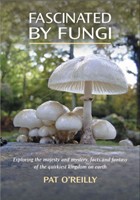
Armillaria gallica, the so-called Humongous Fungus (read about it in Fascinated by Fungi, Pat O'Reilly's new book about fungi) and Armillaria mellea, the Honey Fungus, are just two of a complex of related species that are serious parasites and damage forests. These are members of the Physalacriaceae, but until recently they were included in the Tricholomatacea, a huge family that includes many white-spored fungi of various genera including Tricholoma, Tricholomopsis (the Plums and Custard mushroom is Tricholomopsis rutilans), Deceiver, Laccaria laccata, and Amethyst Deceiver, Laccaria amethystea. All the funnels, such as Clitocybe nebularis, Clitocybe geotropa and Clitocybe gibba belong in the Tricholomatacea, as do Lepista (Blewitts) and Mycena (bellcaps) and Flammulina velutipes or Velvet Shank. Calocybe (St George's Mushroom is Calocybe gambosa) and species from the genus Lyophyllum now belong to the family Lyophyllaceae, whereas they had been included in the Tricholomataceae for many years.

Astraeus hygrometricus, the Barometer Earthstar is not a close relative of the other Geastrum species earthstars, which are grouped here with Phallus impudicus, Clathrus ruber, Clathrus archeri and other stinkhorns in a gasteromycetes group which has never had any taxonomic justification other than the convenience of grouping 'stomach fungi' together. Cyathus striatus and Crucibulum laeve are bird's-nest fungi in this group. Jelly fungi, another mixed bag within the Basidiomycota, include Auricularia auricula-judae, Jelly Ear Fungus, and Exidia, Calocera, Pseudohydnum and Tremella species.

Boletes are interesting, and many are edible. Boletus edulis, known as Cep, Cépe, or Penny Bun Bolete (King Bolete in the USA, and Porcini in Italy) is most highly rated. Other boletes with pores include Boletus satanas, Boletus badius, Suillus luteus, Suillus bovinus, Leccinum scabrum and Strobilomyces strobilaceus (synonym Strobilomyces floccopus). Some boletoid fungi have gills - Gomphidius roseus, Chroogomphus rutilus and Hygrophoropsis aurantiaca are examples. Paxillus species have recently been split up, too, and DNA sequencing has provided the evidence necessary for recategorisation. Paxillus involutus is the Brown Rollrim, now known to be deadly poisonous.

Back with good edible species, we have Cantharellus cibaria and other Chanterelle mushrooms - Horn of Plenty, Craterellus cornucopioides is one such; club fungi and some coral fungi are related - see Clavulina, Clavulinopsis and the Cauliflower Fungus Sparassis crispa. Hedgehog fungi, Hydnum repandum and Hydnum rufescens, also reside in the order Cantharellales. Certain other spined fungi belong in Boletales and Russulales, for example, so form is not a guaranteed guide to phylogeny.

Wood-staining Chlorociboria aeruginascens, the Green Elfcup, is in form similar to many other cup fungi in the Ascomycota, such as Orange Peel Fungus, Aleuria aurantia, Scarlet Elfcup, Sarcoscypha coccinea and Sarcoscypha austriaca, and Bulgaria inquinans. Many other Peziza and pezizoid species are described with images, as are Morels, Morchella esculenta, Black Morels, Morchella elata, and the False Morel, Gyromitra esculenta - the latter is not edible - as well as Helvella saddle fungi, Dead Man's Fingers - Xylaria polymorpha - and the Candle-snuff Fungus, Xylaria hypoxylon. Daldinia concentrica, Cramp Balls or King Alfred's Cakes, also belongs to this group. Even a low-powered microscope reveals a lot about these kinds of fungi. Spore analysis needs a powerful microscope - mine is trinocular and I use it for taking spore and cystidia photographs.

Grassland fungi include CHEG species - Clavaria, Hygrocybe, Entoloma and Geoglossum. Waxcap fungi, written wax cap in some books and waxy caps in the USA, are colourful, and the Pink Waxcap, Hygrocybe calyptriformis and Parrot Waxcap, Hygrocybe psittacina, are just two examples. Entoloma or pinkgill species are mainly dull and difficult to identify, but there are some blue mushrooms in this group including Entoloma serrulatum, which has black-edged gills. Geoglossum species are known as Earth Tongues. Most are rare and small - hard to see in grass. Some poisonous Entoloma species occus in woodlands as well as in grasslands.

Polypores and crust fungi are many and varied. Fomes fomentarius, the Hoof Fungus, also known as Tinder Fungus, grows mainly on birch trees. Another birch-specific polypore is Piptoporus betulinus, also known as the Razor Strop Fungus. Other bracket fungi, or conks, include Ganoderma lucidum, Ganoderma applanatum, Inonotus dryadeus, Fistulina hepatica, Laetiporus sulphureus, Meripilus giganteus and Phaeolus schweinitzii. Crusts are as plentiful and include Stereum hirsutum and Stereum subtomentosum. Trametes versicolor, Turkeytail, is a pored bracket that grows in tiers, as do many more.

In the webcap group, many toxic Cortinarius toadstools are described with pictures, including the deadly poisonous Cortinarius rubellus and Cortinarius orellanus. Gymnopilus junonius, Inocybe geophylla, and Galerina marginata are also poisonous. Deaths and serious poisonings including murders result from being fed fungi from this deadly bunch.

Pisolithus tinctorius (synonym Pisolithis arrhizus), the Dyeball, is ectomycorrhizal with many tree genera including Pinus, pines. Russula fungi and Cortinarius, Tricholoma and Amanita all form mycorrhizae (some write mycorrhizas) with tree root systems. A mycorrhiza is a 'fungus root' - there areimages of mycorrizae on this website. Endomycorrhiza actually invade the roots; ectomycorrhizae surround the root and look liike coral; see in the book Fascinated by Fungi for photographs and much more information on this topic.

The binomial system devised by Carolus (Carl) Linnaeus, is explained in our fungi facts section, as are the naming conventions and rules. Brief biographies of famous mycologists are a valuable addition, and Red Data List information from many countries as well as the implications of UK and EU legislation - Wildlife and Countryside Act; Countryside and Rights of Way Act (CROW Act); Habitats Directive; and explanations of site designations such as SSSI, Ramsar, SAC and SPA are also included. Use our Search facility if necessary.